Reviews ›
Best Heat Press For Sublimation: Reviews, Buying Guide and FAQs 2026
by Rachel Kim · April 22, 2022
If you want the single best heat press for sublimation in 2026, the STAHLS' Hotronix Fusion IQ 16"x20" is the one to beat — its patented dual swing-and-draw design combined with a smart touchscreen gives you professional-grade control that home machines simply cannot match. That said, not every sublimation setup needs a commercial workhorse, and the right press depends entirely on your volume, budget, and workspace. This guide breaks down seven of the top options on the market right now so you can make a confident, informed decision.
Sublimation printing has exploded in popularity over the last few years, and for good reason. The process bonds dye directly into polyester fibers or polymer-coated hard substrates, producing vibrant, wash-resistant prints that won't crack, peel, or fade like screen-printed or DTF alternatives. But your sublimation printer is only half the equation — the heat press is where the magic actually happens. If the temperature is off by 20 degrees or the pressure is uneven, you end up with ghosting, incomplete transfers, and wasted substrate. If you're new to the process, it's worth reading What is Sublimation Printing? before diving into hardware decisions. For everyone else, let's get into the machines.
Choosing the right heat press for sublimation is different from choosing one for heat transfer vinyl. Sublimation requires precise, even heat distribution across the entire platen — typically between 380°F and 400°F — along with consistent medium-to-firm pressure and accurate timing. A press that runs hot in the center and cool at the edges will ruin transfers every single time. According to the Wikipedia overview of dye-sublimation printing, the process relies on sublimation — gas-phase dye transfer under heat and pressure — which means the physics are unforgiving of inconsistent equipment. With that in mind, here is a look at seven presses that actually deliver consistent results, from beginner bundles to professional-grade commercial units. You can also browse our full product review catalog for more equipment breakdowns.
Contents
- Editor's Recommendation: Top Picks of 2026
- Product Reviews
- Siser EasyWeed Heat Transfer Vinyl — Best HTV Companion for Sublimation Projects
- STAHLS' Hotronix Fusion IQ 16"x20" — Best Overall Professional Heat Press
- PowerPress Industrial Digital Sublimation Heat Press 15x15 — Best Budget Industrial Option
- Cricut EasyPress 3 12"x10" Bundle — Best for Beginners and Crafters
- Stahls' Hotronix Auto Clam Heat Press 16"x16" — Best Auto-Open Clam Design
- Heat Press Nation Signature Series 16"x20" — Best Slide-Out Drawer Heat Press
- SHUOHAO Upgraded 15-in-1 Heat Press 12"x15" — Best Multi-Purpose Combo Press
- Key Features to Consider When Choosing
- Questions Answered
- Next Steps
Editor's Recommendation: Top Picks of 2026
- #PreviewProductRating
- Bestseller No. 1
 Rating:

- Bestseller No. 2
 Rating:
 - Bestseller No. 3
 Rating:
 - Bestseller No. 4
 Rating:
 - Bestseller No. 5
 Rating:
 - Bestseller No. 6
 Rating:
 - Bestseller No. 7
 Rating:
Product Reviews
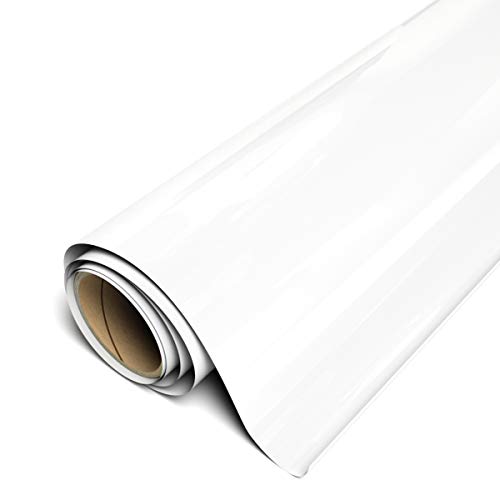
1. Siser EasyWeed Heat Transfer Vinyl 11.8" x 15ft — Best HTV Companion for Sublimation Projects
Before we get into the presses themselves, it's worth talking about one of the materials that works alongside them. The Siser EasyWeed HTV isn't a heat press — it's the industry-standard heat transfer vinyl that millions of crafters and commercial decorators use daily, and it pairs exceptionally well with any press on this list. If your projects mix sublimation with cut-vinyl designs, EasyWeed is the material you'll reach for most. The 11.8" x 15ft roll is sized to fit virtually any professional or craft cutter on the market, including both Siser's own Romeo and Juliet HD cutters and the full Cricut and Silhouette lineup.
What makes EasyWeed stand apart from competing HTVs is its sticky carrier backing, which holds even the finest cut details in place during weeding — no tweezers required for intricate lettering. The 1-second tack feature means you can layer multiple colors without waiting for the first layer to fully cure, which speeds up production significantly. It peels hot, so there's no awkward cooling period between applications. The vinyl adheres to cotton, polyester, blends, leather, and a wide range of other fabrics, making it genuinely versatile across the kind of projects that sublimation printers tackle. If you're building out a complete custom apparel setup, pairing EasyWeed with a quality sublimation press covers virtually every decoration scenario you'll encounter.
CPSIA certification matters here too. If you're producing items for children's apparel, regulatory compliance is non-negotiable. EasyWeed's certification means you can confidently sell or gift decorated children's clothing without worrying about chemical safety violations. For a deep dive into printable materials that complement your heat press setup, check out our guide to the best printable fabric sheets for additional substrate options.
Pros:
- Sticky carrier backing makes weeding intricate designs fast and clean
- 1-second tack allows immediate layering without waiting for cooldown
- CPSIA certified — safe for children's apparel production
- Compatible with virtually every craft and professional cutter on the market
Cons:
- This is vinyl, not a heat press — needs to be purchased alongside a press
- White colorway only in this listing; other colors sold separately
2. STAHLS' Hotronix Fusion IQ 16"x20" Swing & Draw Heat Press — Best Overall Professional Heat Press
The STAHLS' Hotronix Fusion IQ is the most capable heat press on this list, and it earns that position through a combination of engineering decisions that actually matter for sublimation work. The patented dual-function design lets you operate it as either a swing-away press or a draw/pull-out platen press, which is a genuinely useful flexibility when you're switching between different garment types or sharing a workspace with multiple operators. Swing-away is ideal for precise placement — the upper platen moves completely out of the way so you can position your transfer accurately without reaching over a hot plate. The draw function is faster for high-volume runs where placement is already dialed in.
The smart touchscreen control system is what truly separates the Fusion IQ from mid-range competitors. The ultra-responsive display supports unlimited preset programs, which means you can save separate settings for sublimation on polyester T-shirts, ceramic mugs (with the appropriate attachments), rigid aluminum panels, and any other substrate you work with regularly. Live readouts of time, temperature (32°F–430°F), and pressure give you real-time confirmation that every press cycle is hitting your target parameters. For sublimation, where a 15-degree temperature variance can mean the difference between a vibrant transfer and a washed-out one, that level of monitoring is invaluable. The 16"x20" non-stick coated platen is ¾" thick for rigidity and even heat distribution, and it's compatible with the full STAHLS' Quick Change Platen system if you need to swap to specialty shapes.
This is a commercial-grade machine priced accordingly, and it's not the right choice if you're doing occasional hobby projects. But if you're running a decorated apparel business, operating a print-on-demand shop, or producing custom sublimation products at any meaningful volume, the Fusion IQ pays for itself in time saved, rejected transfers avoided, and consistent output quality. Pair it with one of the 12 best sublimation printers we've reviewed and you have a complete professional production setup.
Pros:
- Patented dual swing-and-draw operation adapts to your workflow
- Smart touchscreen with unlimited saved presets for different substrates
- Live time, temperature, and pressure readouts during every press cycle
- Compatible with the full STAHLS' Quick Change Platen accessory ecosystem
- Handles the full range from HTV to sublimation to DTF and DTG
Cons:
- Premium price point puts it out of reach for casual hobbyists
- Large footprint requires dedicated workspace

3. PowerPress Industrial-Quality Digital Sublimation Heat Press Machine 15x15 — Best Budget Industrial Option
The PowerPress 15x15 is the press that introduced a lot of small-business owners to professional-grade heat transfer. It occupies an interesting position in the market: the specs read like a commercial machine — 1400W power draw, 15x15 inch Teflon-coated heating plate, digital control board with a temperature range of 32°F to 455°F and a time range up to 999 seconds — but the price sits firmly in the mid-range category. For a small print shop or a home-based business scaling up from a beginner iron-style press, the PowerPress delivers consistent sublimation results without requiring a commercial-equipment budget.
The Teflon coating on the heating plate is important for sublimation work specifically. It prevents ink residue from transferring back onto subsequent substrates and protects delicate materials from direct contact with the hot metal surface. The removable silicone lower mat is a genuinely thoughtful feature — it lifts off for washing when ink bleeds through, and it's replaceable when it eventually wears out, which extends the useful life of the machine considerably. The bottom handle is an easy-to-overlook detail that matters in practice: at high temperatures, the frame can flex slightly as metal expands, and having a dedicated grip point to open the plate safely is a real safety improvement over machines that require you to grab the frame itself.
Where the PowerPress shows its budget origins is in pressure consistency across the full 15x15 platen — the edges can run slightly different from the center, which means you should run a pressure test with parchment paper before committing to a production run on expensive substrate. That said, for the price, the PowerPress 15x15 is one of the best-value machines available for dedicated sublimation work in 2026. If you're also thinking about your printer setup, our roundup of the best Epson printers for sublimation pairs well with this machine.
Pros:
- 1400W power for fast heat-up times
- Removable, washable, and replaceable silicone lower mat
- Wide temperature range (32°F–455°F) covers sublimation and most HTV applications
- Bottom handle allows safe opening under high-temperature conditions
Cons:
- Pressure distribution can be slightly uneven at platen edges
- No preset memory — settings must be re-entered manually each session
4. Cricut EasyPress 3 (12"x10") with Heat Press Mat Bundle — Best for Beginners and Crafters
The Cricut EasyPress 3 is not a traditional clamshell press — it's more accurately described as a precision heat plate — and that distinction shapes exactly who should buy it. If you're a crafter working with Cricut-cut HTV designs, doing occasional sublimation on smaller garments, or want something portable and easy to store, the EasyPress 3 is an excellent tool. This bundle pairs the 12"x10" pressing plate with a 15.5"x12.5" heat press mat, which provides the insulated, firm surface that's essential for consistent heat transfer. Without a proper mat, the EasyPress loses a significant portion of its effectiveness.
The integration with the Cricut Heat app is the standout feature here. Rather than guessing at time and temperature settings, the app provides material-specific presets for hundreds of materials and adjusts recommendations based on your specific EasyPress model. For someone just starting out with sublimation or HTV, that guidance removes a major source of failed transfers. The 12"x10" plate size is genuinely useful — it covers full front chest designs on adult T-shirts, handles sweatshirt panels, works on banners and tote bags, and manages blankets in sections. For serious sublimation production work it's limiting, but for one-off projects and small batches it's more than adequate.
The EasyPress 3 heats up quickly, holds temperature well, and applies even pressure across its entire surface when used correctly with the mat. What it can't do is replicate the mechanical pressure of a clamshell or swing-away press — you're applying pressure manually by pushing down, which introduces variability. For consistent sublimation results on hard substrates like ceramic or metal, you need a proper mechanical press. For fabric-based projects? The EasyPress 3 delivers pro-level results at a fraction of the footprint and price. This is also an ideal companion if you're exploring projects from our 36 best sublimation blanks guide.
Pros:
- Cricut Heat app provides material-specific presets — no guesswork on settings
- Bundle includes the essential heat press mat for proper results
- Compact footprint stores easily; ideal for small craft spaces
- Fast heat-up with consistent temperature across the plate surface
Cons:
- Manual pressure application introduces variability compared to mechanical presses
- Not suitable for hard sublimation substrates (mugs, tiles, metal panels)
5. Stahls' Hotronix Auto Clam Heat Press 16"x16" — Best Auto-Open Clam Design
The Stahls' Hotronix Auto Clam solves one of the most consistent pain points in high-volume heat press operation: the repetitive manual motion of lifting and lowering the upper platen thousands of times per day. With the Auto Clam, the press opens automatically when the timer completes, freeing you from the physical strain of manual clamshell operation and virtually eliminating the risk of over-pressing because you were distracted or slow to open. For a shop running 200-plus pieces per day, that automatic opening mechanism is a productivity multiplier and a strain-injury prevention tool in equal measure.
The 16"x16" platen is an ideal size for full-front garment designs — large enough to cover the entire front chest of adult apparel in a single press, but not so large that it's unnecessarily cumbersome for smaller jobs. Hotronix's reputation for precise temperature calibration carries through to the Auto Clam, meaning the platen delivers even heat across its full surface without the center-edge variance that plagues cheaper machines. This matters significantly for sublimation because an uneven press on a large image produces visible color variation across the finished piece.
The professional-grade construction means this press is built for continuous operation — the components are rated for the kind of duty cycle that a busy print shop demands. The engineering philosophy behind Hotronix equipment prioritizes precision over price, and the Auto Clam is no exception. If your operation has reached the point where the physical repetition of a manual press is your production bottleneck, the Auto Clam is the logical upgrade. It's a specialized tool for a specific need, and it fulfills that need exceptionally well.
Pros:
- Automatic opening eliminates manual lifting and reduces operator fatigue
- Hotronix precision calibration ensures even heat across the full 16"x16" surface
- Built for continuous commercial duty cycles
- Eliminates over-pressing from delayed manual opening
Cons:
- Premium price reflects commercial-grade positioning
- Auto-open mechanism adds mechanical complexity compared to manual clams
6. Heat Press Nation Signature Series 16"x20" Slide Out Drawer Heat Press — Best Slide-Out Drawer Design
The Heat Press Nation Signature Series takes a different ergonomic approach from both swing-away and traditional clamshell designs. The drawer-style lower platen slides out toward you, letting you load your garment or substrate on a flat surface at a comfortable working height, position your transfer with both hands, and then slide the drawer back under the upper platen for pressing. This workflow is particularly well-suited to sublimation work with pre-pressed transfers, where precise alignment is critical and fumbling with placement while leaning over a hot upper platen is a real problem.
The gas shock opening mechanism is a standout feature — the upper platen lifts with controlled, damped motion rather than snapping open forcefully or requiring you to heave it up manually. This protects both the operator and the transfer from the jarring motion that can cause ghosting (blurred edges from transfer sheet movement during opening). The upgraded time and temperature gauge gives you clear, accurate readouts throughout the press cycle, and the 16"x20" platen size accommodates full garment fronts, oversized tote bags, pillow panels, and large rigid sublimation substrates without multiple repositioning passes.
Auto-open functionality with SurePressure means the press releases at the programmed time with consistent pressure throughout the cycle. SurePressure helps maintain even contact across the platen surface, which directly addresses the sublimation problem of uneven ink transfer caused by pressure variation. The Signature Series represents Heat Press Nation's best thinking about what professional sublimation operators actually need day to day, and the drawer design specifically rewards shops where garment loading precision makes a measurable difference in output quality.
Pros:
- Drawer-style lower platen enables precise, comfortable garment loading
- Gas shock opening mechanism prevents jarring that causes sublimation ghosting
- SurePressure system maintains consistent contact across the full 16"x20" platen
- Auto-open with timer eliminates over-pressing errors
Cons:
- Drawer mechanism requires clear front clearance in your workspace
- Larger footprint than swing-away designs when the drawer is extended
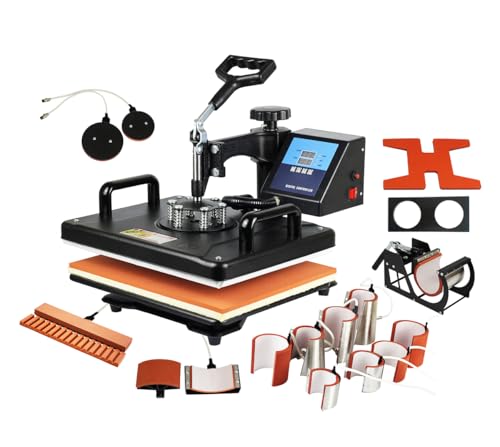
7. SHUOHAO Upgraded 15-in-1 Heat Press Machine 12"x15" — Best Multi-Purpose Combo Press
If you're working across multiple substrate types and don't want to invest in separate machines for each, the SHUOHAO 15-in-1 is the most versatile option on this list. The 15 included attachments cover T-shirts, hats, mugs in eight different sizes (3, 6, 9, 10, 11, 11-oz elongated, 12, and 17-oz), plates, and ballpoint pens. For a hobbyist who wants to explore the full range of sublimation possibilities — or a small shop testing different product lines before committing to specialized equipment — this kind of coverage in a single machine is genuinely valuable.
The dual heating tube technology is the key engineering claim here, and it's a legitimate improvement over single-tube designs. Two heating elements distribute heat more evenly across the platen, reducing the temperature differential between the center and edges that causes uneven sublimation transfers. The interactive dual-display digital controller shows both temperature and time simultaneously, lets you toggle between Celsius and Fahrenheit, and keeps the interface simple enough that you're not hunting through menus during production. The 12"x15" flat platen handles standard garment work comfortably, and the 360-degree rotation swing-away arm gives you flexible positioning options for different workspaces.
The trade-off with a 15-in-1 combo machine is that no single function performs at the level of a dedicated machine. The mug press attachments work well, but a standalone mug press will give you better temperature wrapping and more consistent results on curved surfaces. The same applies to the flat platen — it performs admirably for the price and versatility, but dedicated sublimation presses at higher price points will outperform it on precision. That said, if versatility and value are your primary criteria for 2026, the SHUOHAO 15-in-1 is the machine to beat in its category.
Pros:
- 15 attachments cover an exceptionally wide range of substrates in one machine
- Dual heating tube technology reduces center-to-edge temperature variance
- 360-degree rotation swing-away arm fits different workspace configurations
- Dual digital display shows time and temperature simultaneously
Cons:
- Versatility comes at the cost of specialized performance — dedicated machines outperform it in each category
- Mug attachment results are good but not comparable to a standalone mug press
Key Features to Consider When Choosing a Heat Press for Sublimation
Platen Size and Pressure Consistency
Platen size determines what you can press in a single pass. A 15"x15" or 16"x16" platen handles full adult garment fronts without repositioning. A 16"x20" platen adds capacity for oversized designs, long tote bags, and large rigid panels. Bigger isn't always better — a larger platen that delivers uneven pressure is worse than a smaller one with consistent contact. Before committing to any press, look for reviews specifically addressing pressure distribution at the edges. Uneven pressure is the single most common cause of failed sublimation transfers, and it's difficult to diagnose until you've already committed to a machine.
Pressure adjustment is equally important. Sublimation on thin polyester requires different pressure settings than pressing on thick sweatshirts or rigid aluminum panels. Your press should offer accessible, meaningful pressure adjustment — not just a rough "light/medium/heavy" feel, but a mechanism that lets you reliably reproduce your settings for a specific substrate type. Machines with digital pressure displays or numbered adjustment knobs make this reproducible. Analog pressure adjustment that you set by feel introduces run-to-run variability that compounds over a production batch.
Temperature Range and Consistency
Sublimation transfers typically require temperatures between 380°F and 400°F, but different substrates have different optimal temperatures. Polymer-coated hard goods often perform best at slightly higher temperatures than fabric. Your press needs to reach and hold its target temperature reliably throughout the press cycle — not spike high and recover, but maintain a true steady-state temperature. Look for presses rated to at least 430°F so that your sublimation target temperatures sit comfortably in the middle of the operating range rather than at the top where the heating element is working harder to maintain consistency.
Temperature variance across the platen surface is a separate issue from the set-point accuracy. A press that reads 400°F at the center sensor but runs 375°F at the corners will produce sublimation transfers with visible color gradients — darker in the center, lighter at the edges. This is why commercial-grade machines invest heavily in heating element design and platen construction. Thicker, more thermally conductive platens distribute heat more evenly, and dual heating tube designs (as in the SHUOHAO) address the variance issue more directly than single-element designs.
Press Type: Clamshell, Swing-Away, or Drawer
The press mechanism shapes your entire workflow. Clamshell presses open vertically like a book — they're compact and fast to operate, but the upper platen is directly above your loading area, which means you're working close to a hot surface. Swing-away designs move the upper platen completely out of the loading zone, giving you unobstructed access to place your transfer accurately. Drawer designs go further by bringing the lower platen to you, which is the most ergonomically friendly option for precision work. Auto-open mechanisms on any style eliminate the human variable of delayed opening, which is a consistent source of over-pressing errors in manual operation.
For sublimation specifically, swing-away and drawer designs have a practical advantage: you can position your transfer with both hands on a clear, flat surface without reaching around a hot upper platen. Ghosting — the blurred halo around sublimation designs caused by transfer sheet movement during or after pressing — is more common with clamshell presses where the opening motion can shift the transfer. If print quality is your top priority, a swing-away or drawer press is worth the additional footprint.
Digital Controls and Preset Memory
Digital controls aren't just a convenience feature — they're a quality control tool. When you can set an exact temperature and time, you can reproduce successful results reliably. When you can save those settings as presets, you eliminate re-entry errors at the start of every session. For shops working across multiple substrates — polyester T-shirts at 385°F/45 seconds, ceramic tiles at 400°F/60 seconds, aluminum panels at 390°F/55 seconds — preset memory is a production efficiency tool. Commercial-grade presses like the Hotronix Fusion IQ offer unlimited preset storage, which is meaningful when your substrate library grows over time. Mid-range machines without preset memory require you to re-enter settings from a reference sheet at the start of each job, introducing human error into what should be a controlled process.
Questions Answered
What temperature should I use for sublimation on a heat press?
Most sublimation transfers on polyester fabric perform best at 385°F to 400°F (196°C to 204°C) with a press time of 45 to 60 seconds and medium pressure. Hard substrates like ceramic mugs and aluminum panels often require slightly higher temperatures — 400°F to 410°F — and longer press times depending on the substrate thickness. Always follow the temperature recommendations from your sublimation paper or ink supplier, as different product formulations have different optimal parameters. Run a small test transfer on a scrap piece of the same substrate before committing to a full production run with new materials.
What is the difference between a heat press for sublimation and one for HTV?
The key difference is temperature and pressure requirements. HTV materials typically apply at 305°F to 330°F with light-to-medium pressure and peel times varying by material type. Sublimation requires higher temperatures (380°F–400°F) and medium pressure held for longer periods. Any heat press with a wide enough temperature range handles both applications, but the calibration accuracy matters more for sublimation because the higher temperature window for optimal ink transfer is narrower. A press that's off by 20 degrees is a minor nuisance for HTV work and a significant problem for sublimation.
Can I use any heat press for sublimation printing?
Technically yes, but practically the answer depends on the machine's temperature accuracy and platen consistency. A basic clamshell press with digital controls that reaches 400°F and maintains even heat distribution across the platen will produce good sublimation results. The challenge is verifying the accuracy — the temperature displayed by the press may not match the actual platen surface temperature, especially on budget machines. Use a non-contact infrared thermometer to verify your press's actual surface temperature at multiple points before trusting it for sublimation production. Presses with poor calibration may require a manual offset correction in your settings.
What platen size do I need for sublimation T-shirts?
A 15"x15" or 16"x16" platen is the minimum practical size for adult garment sublimation. It covers the full front chest of an adult T-shirt in a single press without repositioning. A 16"x20" platen adds flexibility for larger designs, youth through adult size range without repositioning, and long substrates like tote bags and banner panels. If you're doing youth sizes only or small custom items, a 12"x10" plate like the Cricut EasyPress 3 can work for fabric-based projects. For maximum versatility across a full garment size range, a 16"x20" commercial press is the standard choice in professional shops in 2026.
How long does a heat press last for sublimation use?
A commercial-grade heat press from manufacturers like STAHLS' Hotronix is built for hundreds of thousands of press cycles and can last a decade or more with basic maintenance. Mid-range machines like the PowerPress Industrial typically last five to eight years with regular use before heating elements or control boards need replacement. The factors that most affect longevity are the quality of the heating element, the robustness of the pressure mechanism, and how well the digital controls handle thermal cycling. Regular cleaning of the platen surface, checking pressure calibration periodically, and following the manufacturer's maintenance recommendations significantly extend operational life on any machine.
Do I need a special heat press for hard sublimation substrates like mugs and tiles?
For flat hard substrates like ceramic tiles, aluminum panels, and MDF boards, a standard flat platen press works well with the appropriate protective sheet. For curved substrates like mugs and bottles, you need either a dedicated mug press attachment or a standalone cylindrical mug press — the flat platen of a standard heat press cannot make consistent contact with a curved surface, resulting in uneven sublimation with lighter areas where pressure was insufficient. The SHUOHAO 15-in-1 includes mug heating attachments specifically designed for this purpose. For shops doing significant mug volume, a dedicated mug press paired with a flat garment press is the more efficient and higher-quality solution.
Buy on Walmart
- Siser EasyWeed Heat Transfer Vinyl 11.8" x 15ft Roll (White) — Walmart Link
- STAHLS' Hotronix Fusion IQ 16"x20" Swing & Draw Heat Press: — Walmart Link
- PowerPress Industrial-Quality Digital Sublimation Heat Press — Walmart Link
- Cricut EasyPress 3 Heat Press Machine (12 "x 10") with Heat — Walmart Link
- Stahls' Hotronix Auto Clam Heat Press 16"x16" - 110V: Profes — Walmart Link
- Heat Press Nation Signature Series 16" x 20" Slide Out Drawe — Walmart Link
- SHUOHAO Upgraded 15 in 1 Heat Press Machine for T-Shirts,Hat — Walmart Link
Buy on eBay
- Siser EasyWeed Heat Transfer Vinyl 11.8" x 15ft Roll (White) — eBay Link
- STAHLS' Hotronix Fusion IQ 16"x20" Swing & Draw Heat Press: — eBay Link
- PowerPress Industrial-Quality Digital Sublimation Heat Press — eBay Link
- Cricut EasyPress 3 Heat Press Machine (12 "x 10") with Heat — eBay Link
- Stahls' Hotronix Auto Clam Heat Press 16"x16" - 110V: Profes — eBay Link
- Heat Press Nation Signature Series 16" x 20" Slide Out Drawe — eBay Link
- SHUOHAO Upgraded 15 in 1 Heat Press Machine for T-Shirts,Hat — eBay Link
Next Steps
- Check current prices on the STAHLS' Hotronix Fusion IQ and the PowerPress Industrial using the Amazon links above — prices on heat press equipment shift frequently and current deals can significantly affect your value calculation.
- Verify your sublimation printer compatibility — your heat press is only as good as the transfers coming out of your printer. Review our guide to the 12 best sublimation printers to confirm your printing setup matches the press you're considering.
- Test your press's actual temperature with an infrared thermometer at multiple platen points before your first production run — don't rely solely on the digital display reading.
- Stock up on the right substrates and media for your press size — check our list of 36 best sublimation blanks to plan your initial product lineup based on your platen dimensions.
- Run a pressure and temperature test batch on scrap substrate with your chosen machine before committing expensive blanks to production — a 30-minute calibration session saves hours of rework and wasted materials.
 |  |  |  |
About Rachel Kim
Rachel Kim spent five years as a merchandise buyer for a national office supply retail chain, evaluating printers, scanners, and printing accessories from Canon, Epson, HP, Brother, Dymo, and Zebra before approving them for store inventory. Her buying process involved hands-on testing against competing models, reviewing long-term reliability data from vendor reports, and vetting price-to-performance claims that manufacturers routinely overstated. That structured evaluation experience translates directly into the kind of buying guidance that cuts through marketing language and focuses on what actually matters for a specific use case. At PrintablePress, she covers printer and printing equipment reviews, buying guides, and head-to-head product comparisons.


Get some FREE Gifts. Or latest free printing books here.
Disable Ad block to reveal all the secret. Once done, hit a button below
| | | |