How to Print Vinyl Stickers
by Marcus Bell · April 02, 2022
The global sticker market is on track to surpass $14 billion by 2030 — and a growing share of that number comes from everyday creators learning how to print vinyl stickers at home. Whether you want custom product labels, branded decals for a small business, or personalized stickers for gifts and events, you can achieve professional results without sending files to a print shop. Explore more project ideas and tutorials in our vinyl and Cricut section.
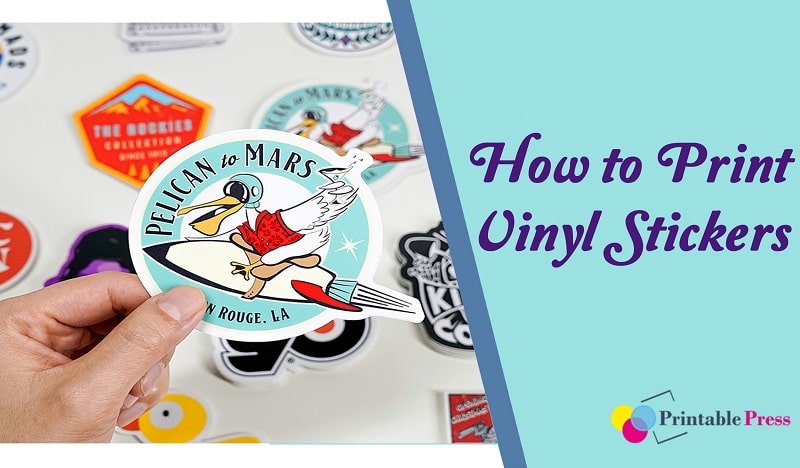
Printed vinyl stickers combine a printed design with a pressure-sensitive vinyl base that adheres to almost any surface. You're not printing on paper and crossing your fingers — you're creating a product that survives water, handling, and daily use when made correctly. The difference between a sticker that peels off in three weeks and one that holds for three years comes down entirely to your materials and workflow.
This guide walks you through every stage of the process. From choosing equipment and preparing design files to finishing, care, and building a repeatable production system, you'll have a clear roadmap no matter where you're starting from.
Contents
- Your First Sticker Setup vs. a Pro Rig
- Step-by-Step: How to Print Vinyl Stickers
- What People Are Actually Making With Vinyl Stickers
- When Printing In-House Makes Sense (And When It Doesn't)
- Breaking Down the Real Cost of Printing Vinyl Stickers
- Building a Sticker Workflow That Scales
- Finishing and Care: Making Your Vinyl Stickers Last
Your First Sticker Setup vs. a Pro Rig
Before you spend a dollar on equipment, you need to know where you're starting. The gap between a beginner setup and a professional rig is real — but you don't need to spend thousands to produce great-looking stickers. The right setup is the one that matches your current volume and budget, with a clear upgrade path when you outgrow it.
What You Need as a Beginner
You can produce quality vinyl stickers with equipment you may already own. Here's the minimum viable setup:
- An inkjet printer — Epson EcoTank or Canon PIXMA models perform reliably on printable vinyl. Avoid laser printers for most vinyl stock — the heat fuser can warp or damage the material before it exits the tray.
- Printable vinyl sheets — Inkjet-compatible sheets with a peel-and-stick backing. Available in glossy, matte, and clear finishes from brands like Avery, Cricut, and Silhouette. Buy a sampler pack to test finishes before committing to a bulk order.
- A laminator — Even a $30 laminator adds critical scratch and water resistance. Cold laminators with peel-and-stick laminate film are a safe option if you're worried about heat affecting your vinyl.
- Scissors or a craft knife — For hand-cutting simple shapes like rectangles and circles. Not precise enough for intricate outlines, but fully functional for basic designs.
Total investment at this level: under $150. You'll be producing usable stickers within an hour of setup.
When to Invest in a Cutting Machine
Hand-cutting becomes a bottleneck the moment you want kiss-cut stickers — stickers cut precisely to their shape with the backing still intact. A cutting machine solves that problem completely.
The two most popular options for sticker makers:
- Cricut Maker 3 — Excellent print-and-cut integration through Cricut Design Space. The easiest machine to learn for beginners stepping up. Handles vinyl, paper, cardstock, and light fabric.
- Silhouette Cameo 4 — More granular control over cut settings and broader software compatibility. Better suited for users who work in Illustrator or prefer full manual adjustment over every parameter.
Both machines land in the $300–$400 range. If you're cutting more than 30 custom stickers per week, a cutting machine pays for itself within a few months of consistent use.
Step-by-Step: How to Print Vinyl Stickers
This is the core process. Follow these steps in order and you'll get clean, professional-looking results on your first run. Skipping steps — especially the test print and lamination — is where most beginners create problems they can't easily fix.
Prepare Your Design File
Your file quality determines your sticker quality. Build these habits from the start and you'll avoid the most common rookie mistakes:
- Work at 300 DPI minimum. Anything lower looks pixelated when printed at full size. 300 DPI is the baseline for print-quality graphics. For small stickers with fine detail, go higher — 600 DPI is better for anything under 2 inches.
- Use RGB color mode. Your inkjet printer renders color in RGB. CMYK is for commercial offset presses — don't convert your file to CMYK for home printing, or you'll get flat, dull colors that don't match your screen.
- Add a bleed area of at least 0.125 inches around your design if you plan to cut to the edge. This prevents white borders from appearing when your cut path shifts slightly. For full edge-to-edge printing technique, our guide on how to print to the edge of paper covers setup in detail.
- Save as PNG with a transparent background when cutting custom shapes. JPEG compression creates artifacts along edges that produce jagged, rough-looking cuts.
- Set your cut lines on a separate layer — usually assigned a unique color your cutting software reads as a cut path rather than a print element. Cricut Design Space and Silhouette Studio handle this automatically when you set up a print-then-cut project.
Software options, from free to professional:
- Canva — Free tier, solid for simple rectangular or circular designs
- Cricut Design Space or Silhouette Studio — Free with your machine, purpose-built for print-and-cut workflows
- Affinity Designer — One-time purchase (~$70), professional vector tools without a subscription
- Adobe Illustrator — Industry standard, subscription-based at ~$55/month
Print, Laminate, and Cut
Once your file is ready, here's the exact sequence to follow:
- Load one vinyl sheet into your printer's manual feed tray. Never stack multiple vinyl sheets — they jam and smear.
- In your printer driver settings, select "Photo Paper" or "Matte Photo Paper" depending on your vinyl's finish. Printing on glossy vinyl follows the same logic as printing on glossy photo paper — our guide on how to print on glossy paper covers the specific settings that prevent smearing and ink bleed on coated surfaces.
- Print a test copy on regular paper first. Check sizing, color accuracy, and margins before committing a vinyl sheet to the job.
- Print your final design on vinyl. Let the ink dry for at least 10–15 minutes. Inkjet ink needs time to cure on vinyl — rushing lamination causes smearing at the edges.
- Apply your laminate. Run the sheet through a hot laminator with a pouch, or apply self-adhesive laminate film by hand. Squeegee out bubbles as you go, working from the center outward.
- Load the laminated sheet into your cutting machine. Run the print-and-cut function — the machine reads registration marks printed in the corners and aligns the blade precisely to your cut path.
- Weed the excess vinyl from around your shapes. Apply stickers to your surface.
Pro tip: Always run a test cut on a small corner of your sheet before committing the full blade path — this lets you fine-tune blade depth and cutting pressure without wasting an entire laminated print.
What People Are Actually Making With Vinyl Stickers
Real-world applications vary widely, and understanding them helps you calibrate your setup to what you actually need. Different use cases demand different materials, finishes, and production workflows.
Personal and Hobby Projects
- Water bottle and laptop decals — These need UV and water resistance. Glossy UV laminate is the right finish. Standard inkjet printable vinyl without laminate won't survive daily contact with moisture and won't hold color under direct sunlight.
- Planner and journal stickers — High-detail, small-format work. Matte vinyl is the right choice — it accepts writing from pens and pencils on its surface, something glossy vinyl resists entirely.
- Party and event labels — Custom labels for favor bags, bottles, and table décor. Turnaround time matters more than durability here. Simpler designs, lower material cost, and hand-cutting works fine at small quantities.
- Car and bumper decals — Require outdoor-grade cast vinyl and UV-resistant laminate. Standard printable vinyl fades, cracks, and peels within a season of outdoor sun and rain exposure. Don't use economy vinyl for exterior vehicle applications.
Small Business Applications
Printed vinyl stickers are a production workhorse for Etsy sellers, craft fair vendors, and small brands:
- Product labels — Custom labels for handmade goods, cosmetics, candles, and food products. Check regulatory requirements for food-contact and skin-contact adhesives in your product category.
- Branding stickers — Logo stickers included in packaging as brand touchpoints. One of the highest-ROI marketing materials you can produce in-house, especially when printed in small batches for seasonal or promotional runs.
- Promotional stickers — Handed out at markets, pop-ups, and events, or included as a free insert with online orders to build brand recognition.
- Window and equipment decals — Small-run signage for storefront branding, vehicle graphics, and equipment identification labels.
According to the Wikipedia overview of sticker production, adhesive labels became commercially widespread in the 1960s and have since expanded into virtually every consumer, industrial, and promotional category — a trajectory the current market data fully confirms.
When Printing In-House Makes Sense (And When It Doesn't)
Printing your own stickers isn't always the right call. Knowing the crossover point between in-house production and outsourcing saves you money, time, and frustration.
Good Reasons to Print Your Own
- Small quantities — Under 100–200 stickers, in-house production beats a commercial print service on unit cost. Print services have setup fees and minimum order quantities that make small runs expensive per sticker.
- Fast turnaround — Print, cut, and ship the same day. No production queues, no shipping transit delays, no vendor communication overhead.
- Frequent design changes — When designs update regularly, in-house printing eliminates per-revision costs and delays. You update the file and reprint. Done.
- Non-standard sizes and shapes — Unusual dimensions or formats that commercial printers either won't accommodate or charge premium rates for.
- Design validation — Print 10 copies to confirm a design before committing to a 500-unit commercial order. The cost of a test run in-house is a fraction of the cost of a botched bulk order.
When to Order From a Print Service
- High-volume identical runs — At 500+ stickers of the same design, commercial digital printers deliver consistency and per-unit cost that home setups can't match. The crossover is typically around 300–500 units depending on material and complexity.
- Specialty materials — Metallic vinyl, holographic stock, ultra-heavy outdoor cast vinyl, or die-cut shapes that exceed your cutter's capability or the material range of inkjet-compatible vinyl.
- Time-constrained production — If your time has real value, hand-laminating and cutting 400 stickers is not the highest use of it. Outsource the volume, keep in-house for small batches.
- Calibrated color accuracy — Commercial printers use ICC-profiled systems that deliver more predictable color matching across runs than consumer inkjet equipment.
Breaking Down the Real Cost of Printing Vinyl Stickers
People consistently underestimate what in-house sticker production actually costs. Here's the honest breakdown — equipment and ongoing materials.
Startup Costs by Tier
| Item | Budget Setup | Mid-Range Setup | Professional Setup |
|---|---|---|---|
| Inkjet Printer | $80–$150 | $200–$400 | $500+ |
| Cutting Machine | — | $300–$400 | $500–$800 |
| Laminator | $25–$50 | $60–$120 | $200+ |
| Design Software | Free (Canva / Cricut DS) | $50–$100 one-time | $600+/year |
| Total Investment | $105–$200 | $560–$1,020 | $1,300+ |
Per-Sticker Material Cost
Once equipment is in place, your ongoing costs are materials and ink. Here's a realistic per-sheet breakdown for a standard 8.5x11 run:
- Printable vinyl (glossy, per sheet): $0.60–$1.00
- Laminate film (per sheet): $0.30–$0.60
- Inkjet ink (full-coverage design, per sheet): $0.20–$0.50
- Total materials per sheet: $1.10–$2.10
At 10–15 stickers per sheet, your material cost runs $0.07–$0.21 per sticker. That's highly competitive with print service pricing at low quantities, which typically starts at $0.25–$0.60 per sticker for orders under 100 units. At 500+ identical units, commercial printers begin winning on cost — that's the crossover point worth tracking.
The real hidden cost is operator time. File prep, printing, drying time, laminating, cutting, and weeding all require your attention. At small scale, that's manageable. At volume, it becomes the production bottleneck that outsourcing can eliminate.
Building a Sticker Workflow That Scales
If you produce stickers regularly — for sales, promotional use, or high-volume hobby projects — you need systems in place, not just skills. Ad-hoc production is inefficient and produces inconsistent results over time.
Streamlining Repeat Orders
- Document your cut settings. Every time you dial in blade depth, speed, and pressure for a material type, record it. Tape a labeled sample swatch to the settings card. This eliminates re-testing at the start of every session.
- Build master print templates. Create templates in your design software with bleed margins, registration marks, and page sizing already configured. Open the template, drop in your artwork, print. Never start from a blank document for a standard sticker run.
- Batch your print sessions. Run multiple designs in one printing session with the same material loaded. Swapping materials mid-session wastes time on settings adjustment and wastes vinyl on test cuts.
- Buy materials in bulk. Purchasing vinyl sheets in 50- or 100-sheet packs cuts per-sheet cost by 20–30% compared to buying in 10-sheet retail packs. Same logic applies to laminate film.
Growing Your Design Library
Your design library is a compounding production asset. Treat it like one:
- Store all master files in a consistent folder structure with version numbering. Never overwrite original working files.
- Track which designs get repeated production runs and which don't. This data directly shapes future design decisions and tells you where to invest optimization effort.
- Separate evergreen designs — ones you reprint regularly — from one-off custom jobs. Evergreen designs justify bulk material stocking and process refinement. Custom one-offs don't.
- As output volume grows, consider upgrading to a 13-inch wide-format printer. The jump from 8.5x11 to 13-inch wide significantly increases stickers-per-sheet and cuts total print sessions for the same output volume.
Finishing and Care: Making Your Vinyl Stickers Last
A beautifully printed sticker that falls apart in three months is a failure regardless of how good the design is. Finishing choices and proper application are what separate a professional result from a waste of materials.
Lamination and Waterproofing
Lamination is the most impactful finishing step you can take after printing:
- Glossy laminate intensifies color saturation and gives stickers a polished, high-gloss look. Best for product labels, branding stickers, and decorative decals where visual impact is the priority.
- Matte laminate reduces glare and delivers a premium, understated finish. Better for stickers intended for planner use or surfaces where someone might need to write on the sticker face.
- UV-resistant laminate is non-negotiable for any sticker exposed to direct sunlight or outdoor conditions. UV degradation is the fastest way to destroy a sticker's color accuracy and adhesive integrity.
Without lamination, inkjet-printed vinyl stickers are not waterproof. Inkjet ink sits on the surface of printable vinyl rather than bonding chemically into it — even a light splash causes smearing on an unlaminated print. This is the single most common mistake beginners make, and it's completely avoidable.
Application and Surface Tips
Even a perfectly printed and laminated sticker fails if applied to a surface that isn't ready for it. Follow this sequence for lasting adhesion:
- Clean the surface with isopropyl alcohol. Oils, fingerprints, dust, and residue all break adhesive bonds. Wipe down and let the surface dry completely before applying anything.
- Apply at room temperature. Cold surfaces reduce adhesive bond strength significantly. Stickers applied to cold surfaces in winter conditions have a much higher failure rate — the adhesive never reaches full tack.
- Squeegee from center outward. Press from the center of the sticker toward the edges using a squeegee or the flat edge of a credit card. This eliminates trapped air bubbles and ensures full surface contact.
- Avoid rough or textured surfaces. Bumpy or uneven textures prevent the adhesive from making full contact, which causes edge lifting within weeks — no matter how good the sticker quality is.
- Keep laminated stickers out of dishwashers. Prolonged submersion in hot water and detergent degrades both the laminate layer and the pressure-sensitive adhesive backing, regardless of laminate quality.
Frequently Asked Questions
What type of printer is best for printing vinyl stickers at home?
An inkjet printer is the correct choice for printing on printable vinyl. Epson EcoTank and Canon PIXMA models are widely used because of their color accuracy and low per-page ink cost. Avoid laser printers for most printable vinyl — the heat fuser drum can warp or damage the vinyl coating before the sheet even exits the machine.
Do I need a cutting machine to make vinyl stickers?
No — you can hand-cut basic shapes with scissors or a craft knife and produce perfectly usable stickers. However, if you want kiss-cut stickers in complex shapes, a cutting machine like the Cricut Maker 3 or Silhouette Cameo 4 is the right investment. The print-and-cut function uses printed registration marks to align the blade precisely to your design, producing clean shape-cut results that hand-cutting can't match at any consistent scale.
Are printed vinyl stickers waterproof?
Only if you laminate them. Inkjet ink sits on the surface of printable vinyl rather than bonding into it, which means water causes immediate smearing on an unlaminated print. Apply a glossy or matte laminate layer after printing to create a water-resistant barrier. For outdoor or high-moisture applications, choose a UV-resistant laminate specifically rated for exterior use.
What is the difference between printable vinyl and regular vinyl?
Regular vinyl — like Oracal 651 or Cricut Permanent Vinyl — is a solid-color adhesive film designed for cutting into shapes, not for printing. Printable vinyl has an inkjet-receptive coating applied over the adhesive backing that accepts ink from your printer, allowing you to reproduce full-color photos, gradients, and complex artwork. Regular vinyl can only produce flat single-color designs, one layer at a time.
How long do printed vinyl stickers last?
Properly laminated printed vinyl stickers last 2–5 years under typical conditions — normal handling, indirect sunlight, and occasional moisture. Outdoor stickers finished with UV-resistant laminate hold up for 3 or more years. Without lamination, expect 3–6 months before fading, water damage, or peeling begins. Surface prep at application and the environment the sticker lives in are the biggest variables affecting long-term durability.
The sticker that lasts is the one you laminated — every shortcut you skip shows up three months later.
 |  |  |  |
About Marcus Bell
Marcus Bell spent six years as a production manager at a small-batch screen printing shop in Austin, Texas, overseeing everything from film output and emulsion coating to press registration, squeegee selection, and garment finishing. He expanded into vinyl cutting and Cricut projects when the shop added a custom apparel decoration line, giving him direct experience with heat transfer vinyl application, weeding techniques, and the real-world differences between Cricut, Silhouette, and Brother cutting machines. At PrintablePress, he covers screen printing, vinyl cutting and Cricut projects, and T-shirt printing and decoration techniques.


Get some FREE Gifts. Or latest free printing books here.
Disable Ad block to reveal all the secret. Once done, hit a button below
| | | |