How to Fix Printer Offline Error on Windows PC
by Karen Jones · March 28, 2022
Have you ever clicked "Print," only to watch Windows flag your printer as "Offline" — even though it's sitting right there, powered on and ready to go? It's one of the most common printer headaches, and the fix is almost always closer than you think. When you need to fix printer offline error on Windows, a systematic approach beats random reboots every time. This guide walks you through the real causes and the most reliable solutions, so you can get back to printing in minutes. For more printer help, explore our printer guides collection.

The "Offline" label in Windows doesn't always mean your printer is physically disconnected. More often it reflects a software glitch — a stalled print queue, a misconfigured setting, or a driver that stopped communicating with Windows. That distinction matters because it changes where you look for the fix. Once you identify the actual cause, the solution typically takes just a few minutes.
These fixes apply to both USB-connected and wireless printers, and they work across Windows 10 and Windows 11. Whether you're running an HP inkjet, a Canon MegaTank, an Epson EcoTank, or a Brother laser, the process is the same. If you're in the middle of comparing models, our Canon Pixma vs HP Envy comparison and our Brother vs Canon laser printer breakdown are worth a read too.
Contents
How to Diagnose Why Your Printer Shows Offline
Pinpointing the Error Source
Before you start clicking through settings menus, take a moment to narrow down what's actually wrong. The offline status can come from several distinct places: a bad cable or dropped Wi-Fi connection, a frozen print job that's blocking the queue, a Windows setting that was accidentally toggled, or a driver that broke after a system update. Each of these has a different fix, and knowing which one you're dealing with saves a lot of trial and error.
Start with the most obvious checks. Is the printer powered on? Does it show any error lights or messages on its panel? Is the USB cable firmly seated at both ends, or — if it's a wireless printer — is it connected to the same Wi-Fi network as your PC? These basics eliminate the most common causes before you touch a single Windows setting.
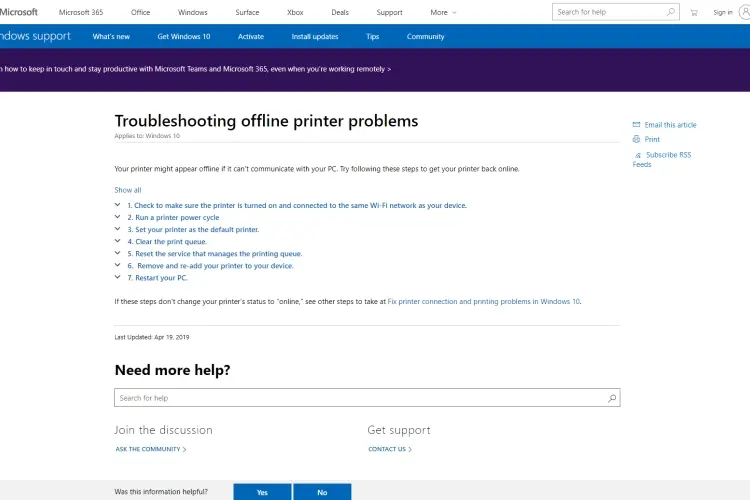
Finding Your Printer in Windows Settings
Open Settings → Bluetooth & devices → Printers & scanners (Windows 11) or Control Panel → Devices and Printers (Windows 10). Find your printer in the list and check its current status. If it reads "Offline," right-click and select See what's printing to look at the queue. A single failed print job can block everything behind it and trigger the offline status — even when the printer hardware is perfectly functional.
Quick tip: If you see multiple copies of the same document stacked in the print queue, cancel all of them before attempting any other fix — a clogged queue is the most overlooked cause of the offline error.
Step-by-Step Fixes to Get Your Printer Back Online
Check Your Physical and Network Connection
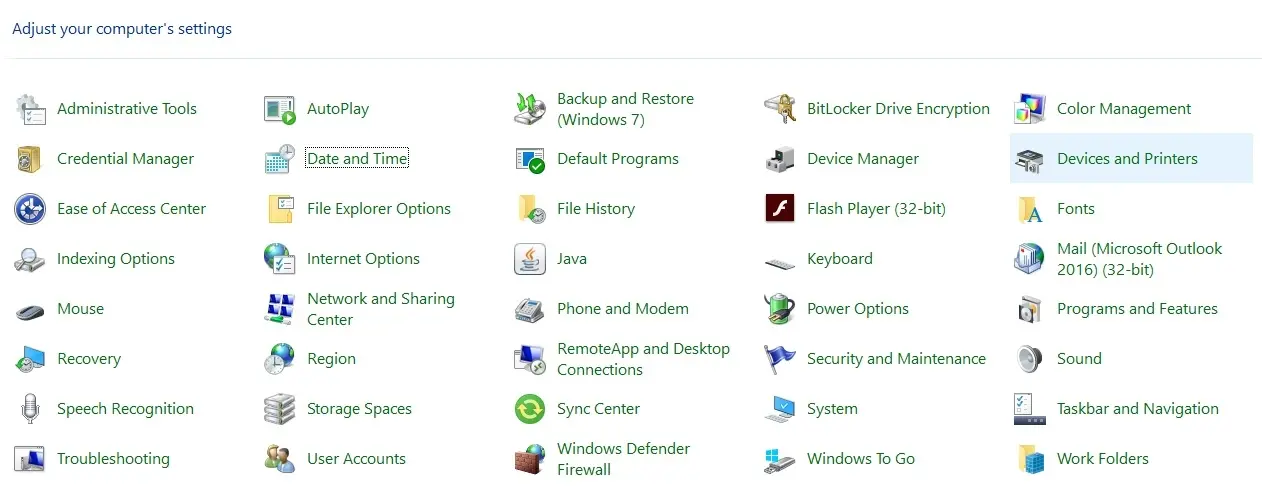
For USB printers, unplug the cable from both the printer and the PC, wait ten seconds, then reconnect it firmly. Try a different USB port on your computer — individual ports can fail. If you have a spare cable, swap it out. For wireless printers, restart both your router and the printer, then confirm the printer reconnects to your Wi-Fi before testing again from the PC. If wireless dropouts keep causing problems, a wired connection is often the more dependable long-term solution. Our best wired printers roundup covers reliable options worth considering.
Set the Correct Printer as Default
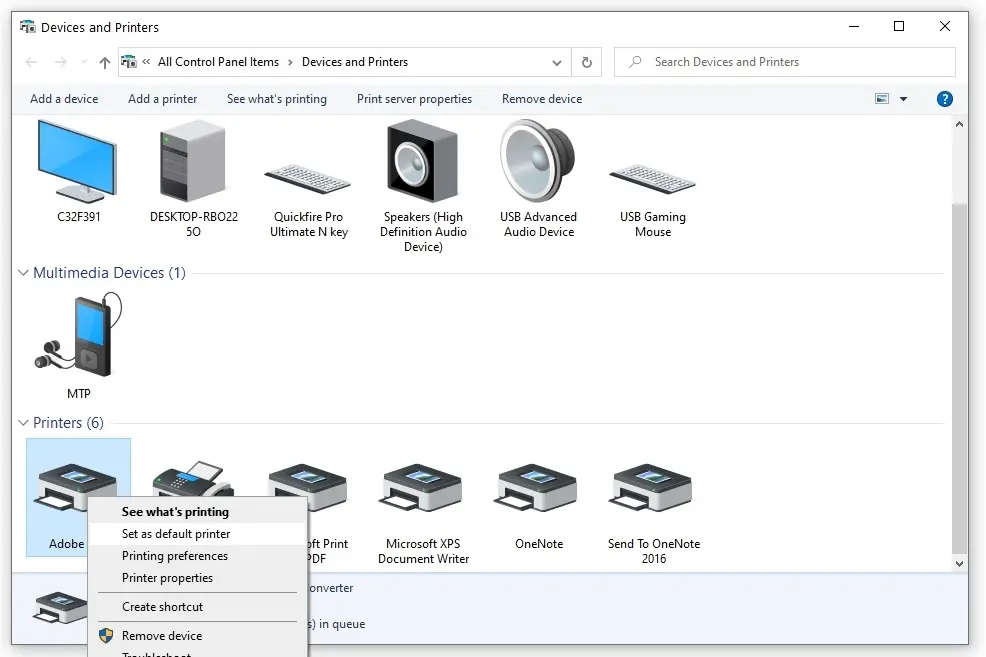
Windows sometimes routes jobs to a virtual or outdated printer entry rather than your actual device. Go to Printers & scanners, click your printer, and select Set as default. Then open the print queue window, click Printer in the menu bar, and confirm that Use Printer Offline is not checked. This one toggle is responsible for a surprising share of persistent offline errors — it can get switched on accidentally during a troubleshooting session and stay that way.
Restart the Print Spooler Service
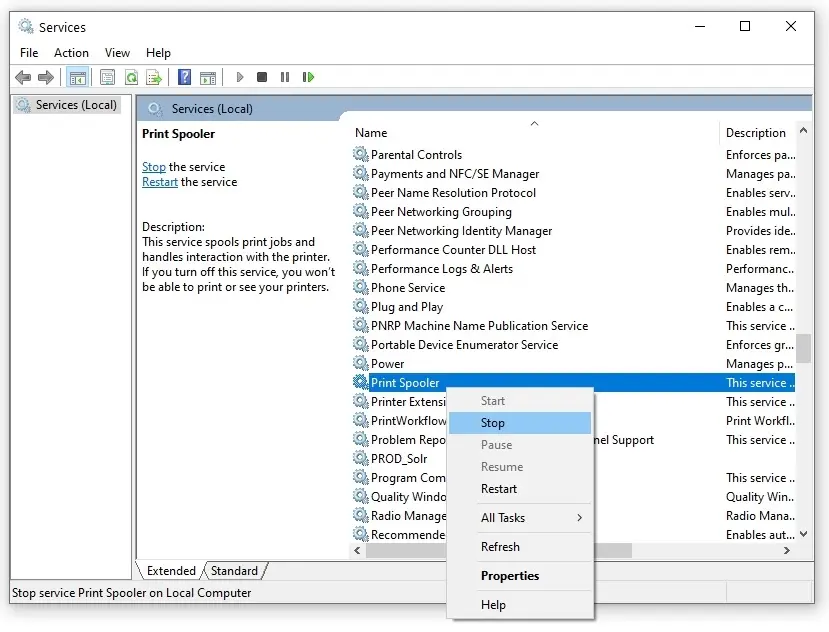
The print spooler is the Windows background service that manages all jobs sent to your printer. When it gets stuck or corrupted, your printer goes offline even if everything else is working correctly. To restart it, press Windows + R, type services.msc, and hit Enter. Scroll to Print Spooler, right-click, and select Stop. Then navigate to C:\Windows\System32\spool\PRINTERS in File Explorer and delete all files inside — but leave the folder itself intact. Return to Services, right-click Print Spooler, and select Start. This clears any corrupted jobs that have been blocking the queue and forces the service to start fresh.
Update or Reinstall the Printer Driver
An outdated or damaged driver is one of the leading causes of the offline error, particularly after a Windows update. Open Device Manager, expand Printers, right-click your device, and choose Update driver. If that doesn't resolve it, uninstall the driver entirely, download the latest version from the manufacturer's official support page, and run a clean install. It takes a few extra minutes but often sticks when other fixes don't.
Understanding print quality settings is another area worth your time once the printer is back up. If you're printing for design or craft work, the difference between DPI and PPI directly affects how sharp your output looks.
| Fix | Time Required | Difficulty | Best For |
|---|---|---|---|
| Check physical connections | 1–2 min | Easy | USB and wireless printers |
| Clear print queue | 2–3 min | Easy | Stuck or failed print jobs |
| Toggle "Use Printer Offline" | 1 min | Easy | Accidental setting changes |
| Restart Print Spooler | 5–10 min | Moderate | Corrupted spooler service |
| Update or reinstall driver | 10–20 min | Moderate | Post-Windows-update failures |
| Run Windows Troubleshooter | 5 min | Easy | General diagnosis starting point |
| Remove and re-add printer | 10–15 min | Moderate | Persistent or recurring errors |
Mistakes That Keep Your Printer Stuck Offline
Restarting Without Clearing the Queue
One of the most common mistakes is rebooting your PC or printer repeatedly without addressing the underlying cause. If a corrupted print job is sitting in the spooler, it survives a standard restart and puts your printer straight back offline the moment Windows reloads. Always cancel all pending jobs and clear the spool folder before you reboot. A restart after clearing the queue is genuinely useful. A restart instead of clearing the queue is just delay.
Ignoring Duplicate Printer Entries
Windows accumulates ghost printer entries over time — especially after driver updates or after switching between USB and wireless connections on the same device. If your printer appears twice in the list (for example, "Epson EcoTank ET-2760" and "Epson EcoTank ET-2760 (Copy 1)"), you may be sending jobs to the inactive entry. Remove all duplicates, keep only the one that's currently active, and set it as your default. This kind of configuration drift also affects users who manage multiple printing devices. If you're comparing inkjet technologies for different projects, our Canon MegaTank vs Epson EcoTank comparison covers how these two popular lines handle connectivity and maintenance differently.
Skipping the Driver Update After Windows Updates
Major Windows updates frequently change how the operating system communicates with printers. If your device goes offline shortly after a system update, a driver conflict is the most likely culprit. Don't skip the reinstall step just because other fixes seemed to work temporarily. A clean driver from the manufacturer's site is the one that sticks.
Warning: Only download printer drivers from your manufacturer's official website — third-party driver sites frequently bundle malware that can cause far bigger problems than an offline error.
Weighing Your Fix Options: What Works Best When
Quick Fixes vs. Deep Fixes
Not every offline error warrants the same level of effort. Quick fixes — checking connections, clearing the queue, toggling the offline setting — resolve the majority of cases and take under five minutes each. These should always be your first move. Deep fixes like restarting the spooler or doing a full driver reinstall are more involved, but they deliver lasting results when the surface-level fixes don't hold. The table above gives you a clear reference for which fix to reach for based on your situation and how much time you have.
Printer choice also plays into long-term reliability. Users printing for craft and transfer work — like those doing sublimation or heat press projects — often benefit from printers with more stable wireless implementations. Our best sublimation printers for t-shirts review covers connectivity reliability alongside print quality. And if you're deciding between printing technologies altogether, the direct thermal vs thermal transfer guide breaks down how each method handles connectivity and hardware demands differently.
When to Remove and Re-Add the Printer
If you've worked through every fix and the printer keeps dropping offline within a day or two, the cleanest path forward is removing it from Windows entirely and reinstalling it from scratch. Go to Printers & scanners, click your device, select Remove device, restart your PC, then add the printer fresh via the same menu. This wipes out any corrupted configuration that's persisting through other fixes and gives Windows a clean slate to work from.
Smart Habits to Prevent the Offline Error Recurring
Keep Drivers and Firmware Current
The most effective long-term strategy is staying current on both your printer's driver and its firmware. Manufacturers release updates specifically to maintain compatibility with evolving Windows versions. Make a habit of checking your printer brand's support page every few months. Enabling automatic Windows updates and pairing that with periodic manual driver checks keeps the communication between your PC and printer consistently stable — and dramatically reduces how often the offline error shows up in the first place.
Use a Stable Connection Method
Wireless printing is convenient, but it's inherently more prone to dropouts than a direct USB or Ethernet connection. If you print frequently — especially for projects where output quality matters — a wired setup is worth the minor inconvenience. You can browse dependable options in our best wired printers guide. The same principle applies across other crafting tools: a stable, predictable connection between device and software prevents most errors before they start. If you've run into similar troubleshooting situations with your cutting machine, our guide on why your Cricut isn't cutting through vinyl walks through the same methodical approach applied to a different device.
Run Regular Printer Maintenance
Keeping your printer in good physical condition reduces the chance of communication errors that Windows interprets as an offline status. Run the built-in cleaning and alignment utilities your manufacturer provides every couple of months. For inkjet printers, printing at least a test page once a week prevents ink from drying in the nozzles — dried ink can cause the kind of intermittent communication failures that look like offline errors but aren't. Small maintenance habits add up to fewer emergency troubleshooting sessions.
Frequently Asked Questions
Why does my printer keep going offline even after I fix it?
Recurring offline errors usually point to a driver conflict, an unstable wireless connection, or a corrupted spooler entry that survives restarts. Reinstall the driver fresh from the manufacturer's official support page and consider switching to a USB or Ethernet connection for a more permanent solution.
Can a Windows update cause my printer to go offline?
Yes, and it happens fairly often. Major Windows updates can overwrite or conflict with existing printer drivers. If your printer went offline shortly after an update, download the latest driver directly from your printer manufacturer's support page and perform a clean reinstall — don't rely on the version Windows finds automatically.
How do I clear a stuck print queue in Windows?
Go to Settings → Printers & scanners, click your printer, and select "See what's printing." In the queue window, click Printer in the menu bar and choose Cancel All Documents. If jobs won't clear, stop the Print Spooler service in services.msc, delete all files inside C:\Windows\System32\spool\PRINTERS, then restart the service.
Does the fix printer offline error Windows process differ between Windows 10 and Windows 11?
The underlying fixes are identical — the main difference is navigation. Windows 10 uses Control Panel → Devices and Printers, while Windows 11 routes you through Settings → Bluetooth & devices → Printers & scanners. Every fix described in this guide — spooler restart, driver update, queue clearing — works the same way on both versions.
Key Takeaways
- Always clear the print queue and check the "Use Printer Offline" toggle before attempting any advanced troubleshooting — these two steps resolve the majority of cases.
- Restarting the Print Spooler service and deleting the files in the spool folder clears corrupted jobs that survive standard reboots.
- Driver conflicts — especially after Windows updates — are a leading cause of persistent offline errors, and a clean reinstall from the manufacturer's site is the most reliable fix.
- Keeping drivers current and using a wired connection are the most effective long-term strategies for preventing the offline error from coming back.
 |  |  |  |

About Karen Jones
Karen Jones spent seven years as an office manager at a mid-sized financial services firm in Atlanta, where she was responsible for a fleet of more than forty inkjet and laser printers spread across three floors, managed ink and toner procurement contracts, and handled first-line troubleshooting for connectivity failures, paper jams, and driver conflicts before escalating to IT. That daily exposure to printers from Canon, Epson, HP, and Brother under real office conditions gave her a practical command of setup, maintenance, and common failure modes that spec sheets never capture. At PrintablePress, she covers printer how-to guides, setup and troubleshooting tips, and practical advice for home and office printer users.


Get some FREE Gifts. Or latest free printing books here.
Disable Ad block to reveal all the secret. Once done, hit a button below
| | | |