Reviews ›
Best Duplex Printers in 2026: Reviews, Buying Guide, and FAQs
by Rachel Kim · March 26, 2022
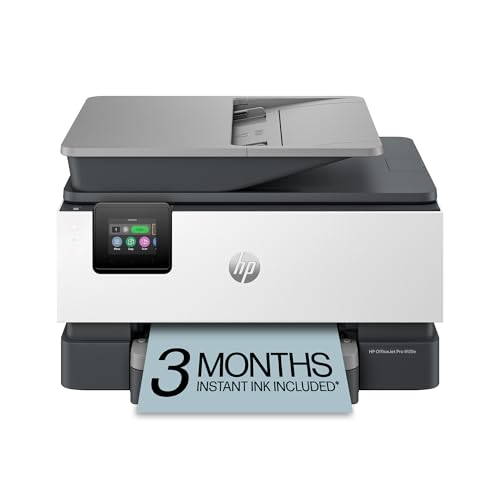
The HP OfficeJet Pro 9125e is our top pick for 2026 — it delivers fast color printing with AI-powered formatting at a price that makes sense for most offices. But it's not the right printer for everyone, and that's exactly why we tested seven of the best duplex printers on the market today.
Duplex printing — the ability to automatically print on both sides of a sheet — has gone from a luxury feature to a baseline expectation. Whether you're running a small home office or managing a busy workgroup, a duplex printer cuts your paper use in half and keeps things moving. The real question is which machine fits your workload, your budget, and your print volume. Inkjet or laser? Color or monochrome? Fast or quiet?
We've reviewed seven top-rated duplex printers across every major category. Each one was evaluated for print speed, output quality, connectivity, paper handling, and long-term running costs. Browse our full printer reviews for more comparisons, and keep reading for everything you need to make a confident choice in 2026.

Contents
- Standout Models in 2026
- Our Hands-On Reviews
- HP OfficeJet Pro 9125e — Best for Office Color Printing
- HP LaserJet Pro MFP M428fdw — Best Monochrome Laser MFP
- Canon Color imageCLASS MF743Cdw — Best Color Laser Under $500
- HP Color LaserJet Pro M479fdw — Best for Business Color Laser
- Brother MFC-L2750DW — Best Fast Monochrome Laser
- HP OfficeJet Pro 8125e — Best for Home Office
- Brother MFC-L8900CDW — Best High-Volume Color Laser
- Key Features to Consider When Choosing
- Questions Answered
- Final Thoughts
Standout Models in 2026
- #PreviewProductRating
- Bestseller No. 1
 Rating:

- Bestseller No. 2
 Rating:
- Bestseller No. 3
 Rating:
- Bestseller No. 4
 Rating:
 - Bestseller No. 5
 Rating:
 - Bestseller No. 6
 Rating:
 - Bestseller No. 7
 Rating:
Our Hands-On Reviews
1. HP OfficeJet Pro 9125e — Best for Office Color Printing
The HP OfficeJet Pro 9125e is a serious workhorse for offices that need sharp, professional-quality color output without the overhead of a laser machine. It prints up to 18 ppm in color and 22 ppm in black — fast enough to keep a small team from waiting at the printer. The auto duplex printing and scanning, combined with an auto document feeder, means you can push through multi-page jobs without touching a single sheet manually.
What sets this model apart in 2026 is HP's AI formatting feature. When you print web pages or emails, the printer intelligently removes clutter — ads, nav bars, and broken layouts — so your prints come out clean on the first try. That alone saves paper and frustration. The 250-sheet input tray handles a week's worth of printing for most small offices, and the included 3-month Instant Ink trial makes it easy to control costs from day one.
Connectivity is fully modern: Wi-Fi, USB, and HP Smart app integration for mobile printing. If you need a color all-in-one that handles everyday office tasks with minimal fuss, this is your machine.
Pros:
- Fast color print speeds (18 ppm color, 22 ppm black)
- AI-powered page formatting eliminates wasted prints
- Auto duplex print and scan with ADF included
- 3-month Instant Ink trial reduces upfront ink cost
- 250-sheet input tray suits busy offices
Cons:
- Inkjet running costs can climb without a subscription plan
- Color output quality dips slightly on plain copy paper
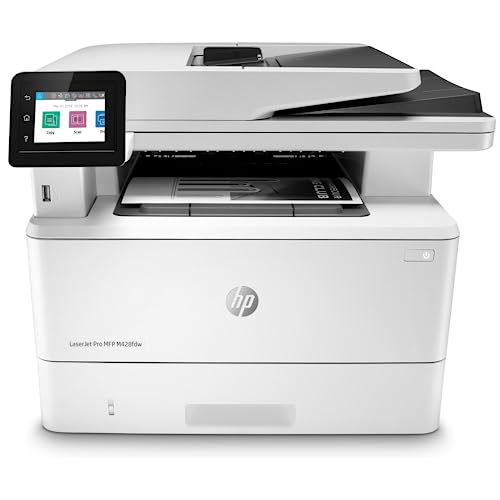
2. HP LaserJet Pro MFP M428fdw — Best Monochrome Laser MFP
If your office prints primarily text documents and you want the lowest possible cost per page, the HP LaserJet Pro MFP M428fdw is the benchmark. Laser printing delivers crisp black text at a consistent quality that inkjet simply cannot match at volume. Built-in Ethernet and Wi-Fi give you flexible network placement, and Alexa compatibility means you can trigger print jobs hands-free — a small but genuinely useful touch in a busy office environment.
Security is a real strength here. HP Wolf Pro Security is baked into the hardware, firmware, and OS, protecting your network from the printer itself — a risk most businesses overlook. If your office handles sensitive documents, that matters. The workflow automation feature lets you program multi-step tasks into the customizable control panel, which is a time-saver for repetitive jobs like scanning to folder, printing from shared drives, or faxing.
Two-sided printing is automatic and fast. You're not sacrificing speed for duplex: this machine keeps up with demand in a busy environment. It's one of the top picks on our best black and white printers roundup for good reason.
Pros:
- Laser quality text — sharp and consistent page after page
- Built-in Ethernet + Wi-Fi for flexible office placement
- HP Wolf Pro Security protects against hardware-level threats
- Alexa voice command support
- Workflow automation via customizable control panel
Cons:
- Monochrome only — no color printing
- Toner cartridge costs add up for very high-volume users
3. Canon Color imageCLASS MF743Cdw — Best Color Laser Under $500
The Canon Color imageCLASS MF743Cdw brings genuine laser color quality to small businesses without a prohibitive price tag. The 5-inch touchscreen feels smartphone-responsive — not sluggish like older laser MFPs — and the Application Library lets you customize the interface so the functions you use most are right at the front. NFC connectivity means you can tap your phone to the printer and start a job instantly without hunting for a network connection.
Canon's one-pass duplex document feeder is a notable feature. Most duplex scanners flip each page and make two passes, slowing everything down. This machine scans both sides in a single pass, cutting your scan time nearly in half for double-sided originals. First-print time is as fast as 10.3 seconds — important when you're pulling out the printer for a quick one-off job. The 3-year warranty is a strong confidence signal for a machine in this price class.
For small print jobs that demand color accuracy — marketing materials, client reports, product sheets — the MF743Cdw delivers consistently reliable results. Canon's reputation for engine reliability means fewer service calls and lower support overhead over time.
Pros:
- One-pass duplex scanning dramatically speeds up multi-page scan jobs
- 5-inch color touchscreen with intuitive smartphone-like interface
- NFC for instant tap-to-print from mobile devices
- 3-year warranty — exceptional for this price range
- Fast 10.3-second first-print time
Cons:
- Color toner cartridges are a recurring cost; factor that into your budget
- Bulkier footprint than inkjet alternatives
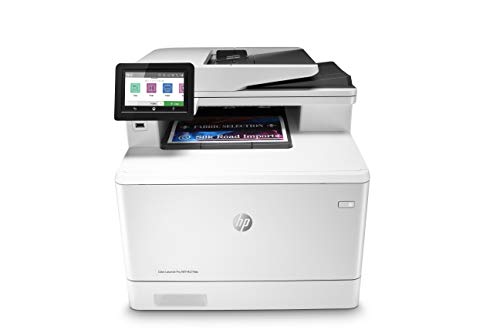
4. HP Color LaserJet Pro M479fdw — Best for Business Color Laser
The HP Color LaserJet Pro M479fdw is the go-to choice for businesses that need color laser quality and aren't willing to compromise on security or workflow efficiency. It handles print, scan, copy, and fax with laser precision, and the wireless setup is straightforward. The touchscreen control panel is fully customizable — you can save your most-used workflows as one-touch presets, which genuinely cuts time on repetitive tasks.
HP Wolf Pro Security is again the headline feature for security-conscious buyers. Data breaches through networked printers are a real vector of attack, and most businesses underestimate the risk. This machine defends against it at the hardware level. Operating in a temperature range of 10–32.5°C, it handles most office environments without issue.
The one-year next-business-day onsite warranty is worth calling out. If something goes wrong, HP comes to you — you don't ship the printer anywhere or wait weeks for a repair. For a business-critical device, that service commitment is a meaningful differentiator. If you're also evaluating options for high-output color work, compare this with our picks on the best color printers for small business.
Pros:
- One-year next-business-day onsite warranty
- HP Wolf Pro Security — hardware-level threat protection
- Customizable touchscreen with saveable workflow presets
- Full MFP: print, scan, copy, fax
- Wireless and network-ready out of the box
Cons:
- Premium price point compared to Canon and Brother alternatives
- Color toner yield can be limiting for very high monthly volumes
5. Brother MFC-L2750DW — Best Fast Monochrome Laser
36 pages per minute. That's not a typo — the Brother MFC-L2750DW is one of the fastest monochrome laser printers available in its class, and it backs that speed up with a 15,000-page monthly duty cycle. You can push this machine hard without worrying about burning it out. Print resolution reaches 2400 x 600 dpi, which means your text documents come out with a sharpness that's immediately obvious compared to lower-resolution competitors.
The 2.7-inch color touchscreen is responsive and intuitive. The 50-sheet ADF handles multi-page originals for copying, scanning, and faxing without supervision. Automatic duplexing covers all four functions — print, scan, copy, and fax — which is a feature not all duplex machines offer across every mode. The 256MB printer memory and 500-page fax memory keep things moving even when the job queue fills up.
Connectivity covers all the bases: Wi-Fi, Ethernet, NFC, and USB. The 250-sheet paper tray plus single-sheet bypass gives you flexibility for different media types including envelopes and labels. If your office deals with high print volumes day after day and color is not a requirement, the MFC-L2750DW is the most capable monochrome machine on this list. When jams do happen — rare with laser machines — our guide on how to unjam a printer walks you through the fix.
Pros:
- Exceptional 36 ppm print speed for monochrome
- 15,000-page monthly duty cycle — built for sustained workloads
- Auto duplex across all four functions (print, scan, copy, fax)
- NFC + Ethernet + Wi-Fi connectivity
- 2400 x 600 dpi for sharp, professional text output
Cons:
- No color printing capability
- Touchscreen is functional but smaller than premium competitors
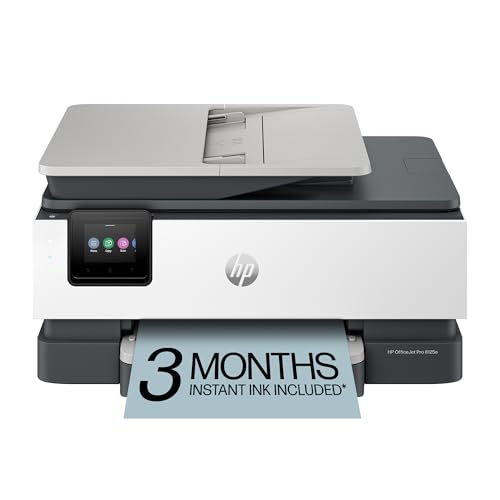
6. HP OfficeJet Pro 8125e — Best for Home Office
The HP OfficeJet Pro 8125e is the 9125e's home-office sibling — smaller, quieter, and priced for a budget that isn't covering an entire team's printing. It prints up to 10 ppm in color and 20 ppm in black, which is more than enough for the occasional report, presentation, or set of business documents from a home workspace. The 225-sheet input tray is a practical size that won't dominate your desk.
HP's AI formatting technology makes a real difference here. Home office users often print emails and web pages — notoriously wasteful when they include headers, sidebars, and ads. The 8125e strips all of that out and gives you a clean, paginated print. The auto document feeder and duplex scanning save you from manually flipping pages when you're copying or digitizing double-sided documents.
The 3-month Instant Ink trial is included, which lowers the barrier to setting up a cost-efficient print subscription from the start. Wireless setup is simple via the HP Smart app, and mobile printing works reliably across both Android and iOS. If your volume is moderate and you want color capability without the size and cost of a full office machine, the 8125e hits the right balance.
Pros:
- Compact size suited to home desks and small spaces
- AI formatting cleans up web and email prints automatically
- Auto duplex print and scan with ADF
- 3-month Instant Ink trial included
- Simple wireless setup via HP Smart app
Cons:
- Color print speed (10 ppm) is slower than office-class competitors
- 225-sheet tray requires more frequent refills under moderate daily use
7. Brother MFC-L8900CDW — Best High-Volume Color Laser
When your workgroup needs color laser output at sustained high volume, the Brother MFC-L8900CDW is the machine to look at. It prints at 33 ppm in simplex mode and produces 7 double-sided pages per minute in duplex — genuinely fast for a color laser. The 70-sheet ADF handles large stacks for copying, scanning, and faxing, and the 8.5 x 14-inch flatbed scanner covers legal-size originals that most machines miss.
The 5-inch color touchscreen is a responsive, full-featured interface — not a stripped-down panel. It supports NFC, Ethernet, and Wi-Fi, so integration into an existing office network is seamless. The 50-sheet multipurpose tray and 250-sheet standard input tray give you 300 sheets of capacity before you need to refill, and media support extends from 3x5-inch cards up to 8.5x14-inch legal sheets.
Duplex capabilities extend across all modes — printing, scanning, copying, and faxing — with 2400 x 600 dpi resolution keeping your output sharp. If your team regularly produces color documents in volume, this machine will keep up. If you're also looking at toner cost management strategies, check out our roundup of top aftermarket toner cartridges to reduce your consumables spend.
Pros:
- 33 ppm color laser speed with 7 duplex pages per minute
- 70-sheet ADF and 8.5 x 14-inch legal flatbed
- 5-inch touchscreen with NFC, Ethernet, and Wi-Fi
- Full duplex across all four MFP functions
- 300-sheet total paper capacity before refill
Cons:
- Larger footprint requires dedicated desk or stand space
- Higher upfront cost — best justified at consistent high monthly volumes
Key Features to Consider When Choosing a Duplex Printer
Inkjet vs. Laser: Which Technology Fits Your Workflow?
This is the first decision to make, and it shapes everything else.
- Inkjet (HP OfficeJet Pro 9125e, 8125e): Lower upfront cost, excellent color photo quality, quieter operation. Running costs are higher per page unless you use a subscription ink plan. Best for mixed-use printing at moderate volume.
- Laser (HP LaserJet M428fdw, Canon MF743Cdw, HP M479fdw, Brother MFC-L2750DW, Brother MFC-L8900CDW): Higher upfront cost, but far lower cost per page at volume. Text output is sharper. Toner doesn't dry out between uses — no wasted cartridges if the printer sits for a week.
If you print under 200 pages a month, inkjet often makes more financial sense. Over 500 pages a month, laser pays for itself quickly.
Print Speed and Monthly Duty Cycle
Speed matters in a shared office environment. But the monthly duty cycle — how many pages the machine is rated to handle per month without degrading — matters even more for longevity.
- Home office users: 10–20 ppm and a duty cycle of 2,000–5,000 pages is more than enough
- Small office (2–5 users): 20–30 ppm and a 10,000+ page duty cycle
- Workgroup (5–15 users): 30+ ppm and 15,000+ pages per month (Brother MFC-L2750DW and MFC-L8900CDW hit this range)
Exceeding your machine's duty cycle consistently shortens its life. Match the machine to your actual print volume, not an optimistic estimate.
Paper Handling and Input Capacity
The auto document feeder (ADF) capacity and input tray size determine how much manual intervention you need day to day.
- A 50-sheet ADF means you can load a full document and walk away — good for most offices
- A 70-sheet ADF (Brother MFC-L8900CDW) handles bigger batches without splitting them
- Input tray size: 225 sheets (HP 8125e) is fine for home use; 250–300 sheets is the sweet spot for shared office printers
- Legal-size flatbed scanning (8.5 x 14 inches) is worth checking if you handle contracts or legal documents
Don't underestimate paper handling. A printer that's constantly out of paper or requiring manual feed is a productivity drain. If you're exploring all-in-one scanning solutions alongside your duplex printer, our best document scanner review covers dedicated options that complement your printer setup.
Connectivity and Security
Every machine on this list offers wireless connectivity, but the details vary.
- Wi-Fi Direct / NFC: Print directly from a phone without a router — Canon MF743Cdw and Brother MFC-L2750DW and MFC-L8900CDW all support this. Useful in conference rooms or for guest access.
- Ethernet: Wired network connection for consistent speeds in shared environments. Present on most laser models reviewed here.
- Security: HP Wolf Pro Security (M428fdw, M479fdw) is the standout feature for businesses handling sensitive data. If your office prints financial reports, client contracts, or HR documents, network printer security is not optional in 2026.
- Mobile printing: HP Smart app, Apple AirPrint, Google Cloud Print, and Mopria are standard across this roundup.
Questions Answered
What is duplex printing and why does it matter?
Duplex printing means the printer automatically flips the paper and prints on both sides without you doing it manually. It matters because it cuts your paper consumption in half on two-sided documents, reduces printing costs over time, and produces more professional-looking reports, booklets, and manuals. All seven printers in this guide support automatic duplex printing.
Is a laser or inkjet duplex printer better for an office in 2026?
For most office environments in 2026, a laser duplex printer is the better long-term choice. Laser toner costs significantly less per page than inkjet ink at volume, the output is sharper for text documents, and toner doesn't dry out between uses. Inkjet makes more sense for home offices with low print volume or for users who need high-quality color photo output on occasion.
What print speed do I need for a small business?
For a small business with 2–5 users sharing one printer, aim for at least 20 ppm in black and a monthly duty cycle of 10,000 pages or more. If your team frequently prints large documents or the printer sees nearly continuous use during business hours, step up to a 30+ ppm machine like the Brother MFC-L2750DW or MFC-L8900CDW to avoid bottlenecks.
Do all duplex printers also scan and copy in duplex?
Not always — this is an important distinction to check. Some printers support duplex printing but only single-sided scanning and copying. The Brother MFC-L2750DW and MFC-L8900CDW on this list support auto duplex across all four functions: print, scan, copy, and fax. The Canon MF743Cdw also features a one-pass duplex ADF for faster two-sided scanning. Always verify the spec sheet before purchasing.
How much should I expect to spend on a quality duplex printer in 2026?
A capable home office duplex printer starts around $150–$250 (HP OfficeJet Pro 8125e range). Small office laser MFPs with full duplex typically run $300–$500 (Canon MF743Cdw, HP M428fdw). Business-class color laser MFPs with advanced security and high-capacity paper handling land between $500–$900 (HP M479fdw, Brother MFC-L8900CDW). Running costs — toner or ink — often matter more than the upfront price over a 3-year ownership period.
What does auto document feeder (ADF) capacity mean for duplex scanning?
The ADF is the input tray that feeds multi-page documents through the scanner automatically. A 50-sheet ADF means you can load up to 50 pages and scan, copy, or fax them without touching each sheet. A 70-sheet ADF (like the Brother MFC-L8900CDW) handles longer documents in a single batch. For duplex scanning, a one-pass ADF (like the Canon MF743Cdw) scans both sides of the page simultaneously, which is significantly faster than two-pass designs that flip each page.
Buy on Walmart
- HP OfficeJet Pro 9125e Wireless All-in-One Color Inkjet Prin — Walmart Link
- HP LaserJet Pro MFP M428fdw Wireless Monochrome All-in-One P — Walmart Link
- Color imageCLASS MF743Cdw - All-in-One, Wireless, Mobile-Rea — Walmart Link
- HP Color LaserJet Pro Multifunction M479fdw Wireless Laser P — Walmart Link
- Brother MFC-L2750DW All-in-One Wireless Monochrome Laser Pri — Walmart Link
- HP OfficeJet Pro 8125e Wireless All-in-One Color Inkjet Prin — Walmart Link
- Brother MFC-L8900CDW Color Wireless All-in-One Laser Printer — Walmart Link
Buy on eBay
- HP OfficeJet Pro 9125e Wireless All-in-One Color Inkjet Prin — eBay Link
- HP LaserJet Pro MFP M428fdw Wireless Monochrome All-in-One P — eBay Link
- Color imageCLASS MF743Cdw - All-in-One, Wireless, Mobile-Rea — eBay Link
- HP Color LaserJet Pro Multifunction M479fdw Wireless Laser P — eBay Link
- Brother MFC-L2750DW All-in-One Wireless Monochrome Laser Pri — eBay Link
- HP OfficeJet Pro 8125e Wireless All-in-One Color Inkjet Prin — eBay Link
- Brother MFC-L8900CDW Color Wireless All-in-One Laser Printer — eBay Link
Final Thoughts
Every printer on this list earns its place in 2026 — the right choice comes down to your print volume, color needs, and budget. Start with the HP OfficeJet Pro 9125e if you need color output and smart features for a small office, or go straight to the Brother MFC-L2750DW if raw monochrome speed and duty cycle are your priorities. Click through to Amazon to check current pricing and confirm availability, then pick the machine that matches how your office actually works — not how you hope it might.
 |  |  |  |
About Rachel Kim
Rachel Kim spent five years as a merchandise buyer for a national office supply retail chain, evaluating printers, scanners, and printing accessories from Canon, Epson, HP, Brother, Dymo, and Zebra before approving them for store inventory. Her buying process involved hands-on testing against competing models, reviewing long-term reliability data from vendor reports, and vetting price-to-performance claims that manufacturers routinely overstated. That structured evaluation experience translates directly into the kind of buying guidance that cuts through marketing language and focuses on what actually matters for a specific use case. At PrintablePress, she covers printer and printing equipment reviews, buying guides, and head-to-head product comparisons.


Get some FREE Gifts. Or latest free printing books here.
Disable Ad block to reveal all the secret. Once done, hit a button below
| | | |