Reviews ›
Best Color Laser Printer for Photos: Reviews, Buyer's Guide and FAQs 2026
by Rachel Kim · April 04, 2022
The global color laser printer market surpassed $9.4 billion in annual revenue in 2024, driven by offices demanding faster output, sharper graphics, and lower per-page costs than inkjet alternatives. If you are shopping for the best color laser printer for photos and professional documents in 2026, the options have never been stronger — or more varied. Choosing the wrong model can mean sluggish speeds, bloated toner costs, or a mismatch with your workflow. This guide cuts through the noise.
Color laser printers use electrostatically charged drums and heat-fused toner to produce sharp, smudge-resistant output that dries instantly. Unlike inkjet models, they excel at text, presentations, and vibrant graphics without the risk of ink bleeding or clogging. For a deeper look at how laser technology has evolved, see Wikipedia's overview of laser printing. If your needs extend beyond laser output — such as scanning large volumes — our Best Book Scanner guide covers dedicated document scanners worth pairing with your printer setup.
In 2026, the standout color laser printers range from compact desktop units under $200 to enterprise-grade workhorses built for high-volume departments. Whether you run a small home office or manage a team of 20, you will find a ranked pick below. We evaluated seven of the most competitive models on Amazon based on speed, connectivity, print quality, cost of ownership, and verified user feedback. Here is everything you need to know before you buy.
Contents
Standout Models in 2026
- #PreviewProductRating
- Bestseller No. 1
 Rating:

- Bestseller No. 2
 Rating:
 - Bestseller No. 3
 Rating:
 - Bestseller No. 4
 Rating:
 - Bestseller No. 5
 Rating:
 - Bestseller No. 6
 Rating:
 - Bestseller No. 7
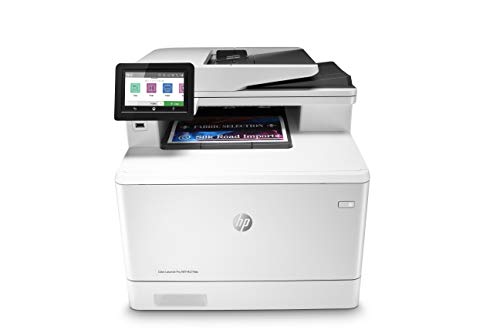 Rating:
Detailed Product Reviews
1. Canon Color imageCLASS MF753Cdw II — Best All-in-One for Speed
Canon's newest MF753Cdw II is a serious upgrade for offices that cannot tolerate wait times. At 35 pages per minute in both color and monochrome, it matches speeds you typically see in devices that cost significantly more. The first-print time of approximately 7 seconds means you are not standing at the machine watching a progress bar. Canon backs this model with a rare three-year limited warranty — a signal of long-term reliability that most competitors do not match at this price tier.
The 4-in-1 functionality (print, scan, copy, fax) combined with wireless duplex capability makes it a complete office solution. Setup is straightforward: the wireless connection walks you through a few steps and you are printing in minutes. The auto document feeder handles multi-page jobs without manual feeding, and the mobile-ready design supports printing from smartphones and tablets. For a printer reviewing at this category, it delivers a compelling blend of speed, versatility, and warranty coverage.
Build quality reflects Canon's established engineering standards. The unit feels solid, not plasticky. Toner yields are competitive, keeping your per-page costs manageable over the machine's life. If speed and reliability over three years are your top priorities in a color laser all-in-one, the MF753Cdw II belongs at the top of your shortlist.
Pros:
- 35 ppm in both color and monochrome — among the fastest in this class
- First print out in approximately 7 seconds
- 3-year limited warranty — significantly longer than most rivals
- Wireless duplex 4-in-1 (print, scan, copy, fax) in one unit
- Auto document feeder for multi-page scan/copy jobs
- Easy wireless setup with minimal steps
Cons:
- Higher upfront cost compared to entry-level color laser options
- Physical footprint is larger — requires adequate desk or shelf space
2. HP Color LaserJet Pro M255dw (Renewed) — Best Budget-Friendly Option
The HP Color LaserJet Pro M255dw in renewed condition is the entry point for buyers who want a legitimate business-grade color laser printer without the full retail price tag. HP's renewed program refurbishes units to working condition, making this a practical option if your print volumes are moderate and budget is a constraint. Print speeds reach up to 22 ppm, which is solid for a single-function color laser in this price range. The 2.7-inch color touchscreen is intuitive and reduces time spent navigating menus.
The HP Smart app is the standout feature here. It lets you set up the printer, manage jobs, receive status notifications, and print or scan remotely from your smartphone. The app's office features reportedly help users organize documents up to 50% faster through customizable shortcuts that eliminate repetitive steps. Automatic two-sided printing is included, which cuts paper costs meaningfully over time.
As a renewed unit, buyers should note that cosmetic blemishes are possible and the warranty may differ from a new purchase. That said, HP's renewed products undergo functional testing, and for a light-to-medium duty office setup, the M255dw delivers reliable color output at a reduced cost of entry. Browse the full range of laser and specialty printers in our printer reviews section for additional comparisons.
Pros:
- Lower cost entry point via HP's renewed program
- HP Smart app enables remote printing, scanning, and job management
- 2.7-inch color touchscreen for straightforward navigation
- 22 ppm color print speed — adequate for light-to-moderate office use
- Automatic duplex printing saves paper
Cons:
- Renewed status means potential cosmetic wear and variable warranty terms
- 22 ppm speed trails newer models significantly
- No fax or copy function — print only
3. Brother HL-L3295CDW — Best Compact Color Laser Printer
Brother's HL-L3295CDW is engineered for offices where desk space is at a premium. The compact footprint does not compromise on output quality — Brother describes it as laser-quality digital color printing, and user reviews confirm that text and graphics land crisp and well-saturated. At up to 31 ppm, it outpaces the HP M255dw while remaining in a smaller chassis. The 2.7-inch color touchscreen gives you job status at a glance and supports quick navigation without drilling through paper menus.
Connectivity is a genuine strength. The HL-L3295CDW supports wireless, NFC (near-field communication), mobile printing, and Ethernet — covering virtually every connectivity scenario a modern office needs. NFC tap-to-print is particularly useful in shared office environments where multiple users print from different devices. Brother also bundles a 2-month Refresh subscription trial and Amazon Dash Replenishment compatibility, meaning your toner can be reordered automatically before you run out.
Automatic duplex printing is built in, reducing paper consumption with no manual page flipping. For a single-function color laser with this connectivity profile and speed, the HL-L3295CDW is one of the strongest compact options available in 2026. It is worth noting that this is a print-only unit — no scan, copy, or fax — so buyers needing those functions should consider the all-in-one models reviewed elsewhere in this guide.
Pros:
- Compact design fits tight workspaces without sacrificing print quality
- 31 ppm — fast output for a compact single-function printer
- NFC, wireless, mobile, and Ethernet connectivity in one unit
- Amazon Dash Replenishment ready for automatic toner reorders
- Includes 2-month Refresh subscription trial
- Automatic duplex printing standard
Cons:
- Print-only — no scanner, copier, or fax capability
- Ongoing toner subscription model may not suit all buyers
4. HP Color LaserJet Enterprise M554dn — Best for Enterprise Security
The HP Color LaserJet Enterprise M554dn is built for environments where security is non-negotiable. HP Wolf Enterprise Security is embedded directly into the printer's hardware, firmware, and operating system. It detects malware in real time and can self-heal from attacks — a capability that most office printers simply do not offer. For organizations handling sensitive documents, this level of built-in protection is a material differentiator, not a marketing footnote.
Print performance is built for sustained high-volume output. The M554dn produces consistently high-quality, two-sided color documents at speeds appropriate for busy departments. HP Web Admin centralizes management across your print environment — you can add devices, push firmware updates, apply corporate policies, and integrate third-party solutions from a single dashboard. That centralization saves IT staff meaningful time when managing fleets of printers across multiple floors or locations.
This is a wired-only model (Ethernet + USB), which is a deliberate enterprise design choice — removing wireless reduces the attack surface. If wireless is required for your workflow, consider the M454dw or M479fdw reviewed below. For IT managers evaluating a color laser printer that can pass a security audit, the M554dn is the strongest candidate in this roundup. Its combination of Wolf Security, centralized management, and duplex color output makes it the default recommendation for corporate environments in 2026.
Pros:
- HP Wolf Enterprise Security with real-time threat detection and self-healing
- HP Web Admin for centralized fleet management and policy enforcement
- High-quality duplex color output designed for sustained volume
- Wired-only design reduces network attack surface
- Strong integration with third-party enterprise solutions
Cons:
- No wireless connectivity — requires Ethernet or direct USB connection
- Higher price point positions it exclusively for business/enterprise budgets
- No scan, copy, or fax — print and duplex only
5. HP Color LaserJet Pro M454dw — Best Wireless Business Printer
The HP Color LaserJet Pro M454dw is HP's answer for growing businesses that need wireless color laser printing with professional-grade security baked in. HP Wolf Pro Security is built into the hardware, firmware, and OS — protecting your data and guarding against cyberattacks without requiring separate software installations. For a mid-range wireless printer, that level of built-in protection is uncommon and worth noting.
Walk-up USB printing is a practical differentiator here. You can plug a USB drive into the front port and print Microsoft Office-formatted files or PDFs directly — no computer required, no driver installation on a guest's laptop. This matters in meeting rooms and shared office spaces where visitors need to print quickly. Automatic two-sided printing is standard, and the wireless setup connects to your network reliably for mobile and remote print jobs.
The M454dw is a single-function printer (print only, no scan/copy/fax), which keeps the footprint and price point focused. If you need those additional functions, HP's M479fdw is the natural upgrade. For businesses that want a fast, secure, wireless color laser printer without the complexity of an all-in-one, the M454dw delivers exactly what it promises in 2026. It is a clean, no-nonsense choice for professional document and graphic output.
Pros:
- HP Wolf Pro Security built into hardware, firmware, and OS
- Walk-up USB printing for Office files and PDFs without a computer
- Wireless connectivity with mobile printing support
- Automatic duplex printing standard
- Clean, focused design without unnecessary complexity
Cons:
- Print only — no scanning, copying, or faxing capability
- Touchscreen is smaller and less intuitive than some competitors
6. Canon Color imageCLASS MF743Cdw — Best for Small Office Workflows
The Canon Color imageCLASS MF743Cdw stands out for its touchscreen usability and NFC connectivity at a price that suits small office budgets. The 5-inch intuitive color touchscreen operates with smartphone-like responsiveness — swipe, tap, and navigate without the frustration of clunky button interfaces. The Application Library lets you customize the device experience so your most-used functions are one tap away, not buried three menus deep.
NFC (Near Field Communication) enables Wi-Fi Direct connections directly from the printer — no external router required for mobile print jobs. This is particularly useful in small offices or home setups where network infrastructure is minimal. Canon's one-pass duplex document feeder scans both sides of a page in a single pass, cutting scan times significantly on multi-page originals. First-print time is as fast as 10.3 seconds, and the device covers all four core functions: print, scan, copy, and fax.
Canon's reliability engineering is evident throughout. Maintenance videos are built into the interface, walking you through toner replacement and common tasks without needing to find a manual. Canon backs the MF743Cdw with a 3-year warranty, matching their newer MF753Cdw II. If you are managing a small office workflow that demands scanning, copying, and faxing alongside color printing, this Canon delivers the full package with a user experience most competitors cannot match. Pair it with a dedicated document scanner — see our book scanner reviews for large-format scanning needs — for a complete office document solution.
Pros:
- 5-inch intuitive touchscreen with smartphone-like operation
- NFC enables Wi-Fi Direct without an external router
- One-pass duplex document feeder for fast multi-page scanning
- Application Library for customized workflow shortcuts
- 3-year limited warranty — strong long-term coverage
- Full 4-in-1: print, scan, copy, fax
Cons:
- First-print time of 10.3 seconds slightly slower than the MF753Cdw II
- Toner cartridge costs can add up in high-volume environments
7. HP Color LaserJet Pro Multifunction M479fdw — Best Multifunction for Teams
The HP Color LaserJet Pro Multifunction M479fdw is HP's full-featured all-in-one built for teams that process high volumes of mixed document types. Print, scan, copy, and fax are all covered, and HP Wolf Pro Security is embedded to protect your business data on every job. The M479fdw includes a one-year next-business-day onsite warranty — meaning if something fails, a technician comes to you rather than requiring you to ship the unit or wait for parts. That is a meaningful support commitment for a business-critical device.
Workflow automation is the signature feature. The customizable touchscreen control panel lets you save multi-step workflow presets — apply them with a single button tap. For teams that process recurring document types (expense reports, client contracts, compliance forms), that automation eliminates manual steps every single time. HP Smart app integration extends this productivity to mobile devices, enabling remote print and scan management.
Operating temperature range of 10 to 32.5°C makes it suitable for standard office environments without climate control concerns. For teams that need a single printer to handle every document function with enterprise-grade security, mobile integration, and workflow automation, the M479fdw is the most complete solution in this roundup. If your workplace also relies on heat transfer printing for merchandise or promotional items, our best printer for heat transfer paper guide covers purpose-built options for that separate use case. Browse all our coverage at PrintablePress printer reviews.
Pros:
- Full 4-in-1: print, scan, copy, fax — covers every office document function
- One-year next-business-day onsite warranty — strong service commitment
- HP Wolf Pro Security built into hardware, firmware, and OS
- Workflow automation via customizable touchscreen presets
- HP Smart app for remote mobile printing and scanning
- Wireless connectivity with automatic duplex printing
Cons:
- Higher price point than single-function models in this roundup
- Larger physical footprint requires dedicated desk or credenza space
Choosing the Right Color Laser Printer: A Buying Guide

Buying a color laser printer in 2026 means navigating a wide range of specs, feature sets, and price points. Focus on the criteria below before committing to any model. The wrong printer can cost you more in toner, lost productivity, and maintenance than the upfront price difference between models would suggest.
Print Speed and First-Print Time
Speed is measured in pages per minute (ppm), but the number that matters most in daily use is often the first-print time — how long you wait after hitting print before the first page emerges. Fast ppm with a slow first-print time means every short job feels sluggish. Look for models with first-print times under 10 seconds for busy environments.
- Light use (under 500 pages/month): 20–25 ppm is sufficient
- Moderate use (500–2,000 pages/month): 25–35 ppm recommended
- Heavy use (2,000+ pages/month): prioritize duty cycle and toner yield over ppm alone
- Color ppm often matches monochrome ppm in newer models — confirm both specs
All-in-One vs. Single Function
Single-function printers cost less upfront and fit smaller footprints. All-in-one models add scanning, copying, and sometimes faxing — functions that small offices often need but underestimate until they no longer have them. If your team scans documents daily, an all-in-one pays for itself quickly by eliminating a separate scanner purchase. Note that some scanning workflows work well with dedicated devices — our ID card printer guide covers specialized printing needs that standard color lasers do not serve.
- All-in-one recommended for: offices with regular scanning or copying needs
- Single-function recommended for: high-volume print-only environments where cost per page is the priority
- Fax is still required in legal, healthcare, and government workflows — confirm if needed before buying a print-only unit
Security Features
Office printers are network-connected endpoints. That makes them potential entry points for cyberattacks. In 2026, enterprise and professional buyers should treat printer security as a non-negotiable spec, not an optional upgrade.
- HP Wolf Security (Enterprise and Pro variants): hardware-level threat detection, firmware self-healing, malware prevention built in
- Look for secure print release — jobs hold in a queue until the right user authenticates at the device
- Wired-only models (like the M554dn) eliminate wireless attack vectors — valid choice for high-security environments
- Check for regular firmware update support — abandoned firmware is a long-term liability
Total Cost of Ownership (TCO)
The sticker price is rarely the true cost of a laser printer. Toner cartridge yield and replacement cost determine your long-term per-page expense. High-yield toner cartridges cost more upfront but dramatically reduce cost per page for offices printing 1,000+ pages per month.
- Calculate cost per page: (cartridge price) ÷ (rated page yield) = per-page cost
- Color toner typically costs 3–5x more per page than monochrome — budget accordingly
- Subscription programs (like Brother's Refresh or HP Instant Ink) can reduce costs for predictable print volumes
- Factor in maintenance kit cycles for high-volume models — drums and fusers have rated lifespans
- Duty cycle ratings indicate how many pages the printer is designed to handle monthly — stay below the rated maximum to extend machine life
FAQs
Can color laser printers print photos?
Yes, color laser printers can print photos, but the results differ from inkjet photo printers. Laser printers use heat-fused toner, which produces sharp, vivid prints that resist smudging and dry instantly. For standard office photo printing — product images, headshots, presentation graphics — modern color laser printers deliver excellent results. For gallery-quality photo prints with ultra-fine gradients, a dedicated inkjet photo printer remains the better choice. The models reviewed here all produce strong photographic output for professional document and marketing use.
What is the difference between a color laser printer and a color inkjet printer?
Color laser printers use powdered toner that is melted onto paper using heat and pressure. Inkjet printers spray liquid ink droplets. Laser printers generally print faster, produce smudge-proof output immediately, and have lower per-page costs at high volumes. Inkjet printers typically deliver superior photo quality and handle a wider range of paper types, including glossy photo paper. For office documents, presentations, and vibrant graphics at volume, color laser printers are the more practical choice for most businesses in 2026.
How many pages per month should I be printing to justify a color laser printer?
As a general rule, if you print more than 200–300 color pages per month, a color laser printer will cost less per page than a color inkjet over time, despite the higher upfront price. Offices printing 500 or more pages per month see the most significant cost savings from laser technology. At lower volumes, the lower purchase price of an inkjet may outweigh the per-page advantage of laser. Use the per-page cost calculation described in the buying guide section to run the numbers for your specific usage pattern.
Do I need a multifunction (all-in-one) color laser printer or just a printer?
If your office scans, copies, or faxes documents with any regularity, a multifunction all-in-one saves money and desk space over purchasing separate devices. If your workflow is print-only, a single-function model like the Brother HL-L3295CDW or HP M454dw costs less and often prints faster than equivalent all-in-one units. Assess your actual workflow before buying — most small offices underestimate how often they scan documents until they no longer have a scanner available.
What connectivity options should I look for in a color laser printer in 2026?
At minimum, look for wireless Wi-Fi connectivity and USB. Mobile printing support (via HP Smart, Canon PRINT, or a comparable app) is now essential for offices where employees print from smartphones and tablets. NFC (near-field communication) enables tap-to-print without network configuration — valuable in shared workspaces. Ethernet is important for wired network environments where wireless stability is a concern. Enterprise environments often prioritize wired-only connections to reduce security exposure.
How do I reduce toner costs on a color laser printer?
Several strategies reduce toner expenses meaningfully. First, purchase high-yield toner cartridges rather than standard-yield — the higher upfront cost produces a lower cost per page. Second, use draft or economy print modes for internal documents where quality is less critical. Third, default to duplex (two-sided) printing to cut paper and toner consumption on multi-page jobs. Fourth, consider subscription programs like Brother Refresh or HP Instant Ink for predictable monthly volumes. Finally, avoid printing color when monochrome is sufficient — select grayscale printing for text-only documents.
Buy on Walmart
- Canon Color imageCLASS MF753Cdw II - Wireless Duplex Laser P — Walmart Link
- HP Color LaserJet Pro M255dw Wireless Laser Printer, Remote — Walmart Link
- Brother HL-L3295CDW Wireless Compact Digital Color Printer w — Walmart Link
- HP Color LaserJet Enterprise M554dn Duplex Printer (7ZU81A) — Walmart Link
- HP Color LaserJet Pro M454dw Printer (W1Y45A),White — Walmart Link
- Color imageCLASS MF743Cdw - All-in-One, Wireless, Mobile-Rea — Walmart Link
- HP Color LaserJet Pro Multifunction M479fdw Wireless Laser P — Walmart Link
Buy on eBay
- Canon Color imageCLASS MF753Cdw II - Wireless Duplex Laser P — eBay Link
- HP Color LaserJet Pro M255dw Wireless Laser Printer, Remote — eBay Link
- Brother HL-L3295CDW Wireless Compact Digital Color Printer w — eBay Link
- HP Color LaserJet Enterprise M554dn Duplex Printer (7ZU81A) — eBay Link
- HP Color LaserJet Pro M454dw Printer (W1Y45A),White — eBay Link
- Color imageCLASS MF743Cdw - All-in-One, Wireless, Mobile-Rea — eBay Link
- HP Color LaserJet Pro Multifunction M479fdw Wireless Laser P — eBay Link
Key Takeaways
- The Canon Color imageCLASS MF753Cdw II is the top all-in-one pick for 2026, delivering 35 ppm speeds, a 7-second first-print time, and a 3-year warranty that rivals cannot match at this class.
- For enterprise environments where security is non-negotiable, the HP Color LaserJet Enterprise M554dn with HP Wolf Enterprise Security is the definitive choice — built to detect, neutralize, and self-heal from cyberattacks.
- The Brother HL-L3295CDW is the strongest compact option, combining 31 ppm speeds, NFC, wireless, and Ethernet connectivity in a footprint that fits desks where space is tight.
- When total cost of ownership matters, calculate per-page toner costs before buying — the upfront price difference between models is often recovered within six months of regular printing at moderate volumes.
 |  |  |  |
About Rachel Kim
Rachel Kim spent five years as a merchandise buyer for a national office supply retail chain, evaluating printers, scanners, and printing accessories from Canon, Epson, HP, Brother, Dymo, and Zebra before approving them for store inventory. Her buying process involved hands-on testing against competing models, reviewing long-term reliability data from vendor reports, and vetting price-to-performance claims that manufacturers routinely overstated. That structured evaluation experience translates directly into the kind of buying guidance that cuts through marketing language and focuses on what actually matters for a specific use case. At PrintablePress, she covers printer and printing equipment reviews, buying guides, and head-to-head product comparisons.


Get some FREE Gifts. Or latest free printing books here.
Disable Ad block to reveal all the secret. Once done, hit a button below
| | | |