Sublimation Ink vs Pigment Ink
by Anthony Clark · April 04, 2022
When debating sublimation ink vs pigment ink, the fundamental answer is this: sublimation ink permanently bonds with polyester and polymer-coated substrates through heat, while pigment ink adheres to the surface of a far broader range of media — from cotton and canvas to glossy photo paper. Neither ink type is universally better. The right choice depends entirely on the substrate, the application, and how the finished product will be used. Printers working in the sublimation printing space will find that both technologies have carved out well-defined niches that rarely overlap.
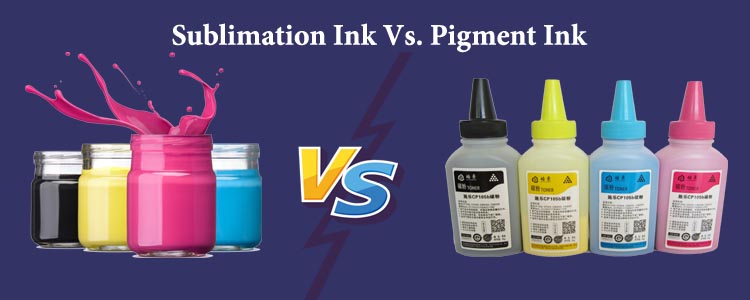
Sublimation ink works through a heat-activated dye-sublimation process: under temperatures of 375–400°F, the ink converts from solid to gas, then diffuses into polyester fibers or polymer coatings and solidifies there permanently. The print becomes part of the substrate at a molecular level — it cannot crack, peel, or wash away. Pigment ink takes a fundamentally different approach. Pigment particles are suspended in a carrier fluid and deposited onto the surface of the media, where they are held in place by the substrate's coating or texture. The result is broader media compatibility, but surface-level adhesion that behaves differently under washing, abrasion, and UV exposure.
Understanding these chemistry differences is the starting point for making smart purchasing and workflow decisions. The sections below break down sublimation ink vs pigment ink across use cases, maintenance demands, workflow tips, trade-offs, and persistent myths that continue to mislead buyers in both camps. For a broader view of competing print methods, screen printing vs sublimation provides useful comparative context alongside this guide.
Contents
Where Each Ink Excels
Sublimation for Polyester and Polymer-Coated Substrates
Sublimation ink is the standard for applications where a permanent, wash-durable result on light-colored synthetic materials is the goal. Common use cases include:
- White or light-colored polyester garments — minimum 65% polyester content for vibrant, stable color
- Polymer-coated hard goods: ceramic mugs, phone cases, aluminum panels, mousepads, puzzles
- Sportswear and performance apparel where repeated washing is unavoidable
- Custom merchandise with full-bleed, edge-to-edge designs that cannot show borders or seams
- Photo gifts and promotional items that require a soft hand feel with no surface texture
The bond formed during the heat press process is what makes sublimation output so durable. The dye becomes part of the substrate rather than sitting on top — which is why a sublimated mug survives thousands of dishwasher cycles without fading and why sublimated jerseys maintain color integrity through heavy laundering. For hands-on guidance on hard goods, printing on ceramic cups with sublimation covers the specifics of press times, temperatures, and coating requirements.
One critical limitation: sublimation ink on natural fibers produces dull, washed-out results because there are no polymer chains for the dye to bond with. Cotton-poly blends below 65% polyester will show visible color loss after even a single wash. This single factor disqualifies sublimation from a large portion of the blank garment market.
Pigment for Paper, Canvas, and Dark Fabrics
Pigment ink dominates wherever sublimation physically cannot perform. Key applications include:
- Fine art reproduction on cotton rag, watercolor paper, and archival matte media
- Photo printing on glossy, satin, and specialty coated papers for galleries and consumers
- Direct-to-garment (DTG) printing on 100% cotton and dark-colored fabrics
- Archival document printing where print longevity of decades is required without lamination
- Canvas wraps and giclee prints for interior design and commercial art markets
Pigment ink is the backbone of museum-quality giclee printing because pigment particles deposited on acid-free, archival media resist UV degradation and atmospheric pollutants for generations. On the garment side, pigment-based DTG systems handle dark shirts and hoodies — territory sublimation ink cannot enter without a polymer-coated white underbase, which adds cost and complexity.
Caring for Prints and Equipment
Print Longevity
Durability comparisons between the two ink types depend heavily on the end application and storage environment. Neither ink type is universally more durable — context determines everything.
Sublimation prints:
- On polyester garments: fade-resistant through 50+ washes when properly pressed at correct temperature and time
- On polymer-coated hard goods: dishwasher-safe and scratch-resistant after full cure
- UV resistance: moderate indoors; fades more quickly than pigment under prolonged direct outdoor sunlight without a UV-protective clear coat
- No cracking, peeling, or surface separation — the color is embedded, not applied
Pigment prints:
- On archival paper with UV-protective glass framing: rated 100+ years in display conditions according to manufacturer testing standards
- On garments via DTG: wash durability depends heavily on pre-treatment quality and post-cure process — poorly pre-treated garments fade noticeably within 10–15 washes
- Scratch and abrasion resistance: low on uncoated paper and fabric without a clear topcoat
- Superior resistance to yellowing over time when matched with acid-free media
Printer Maintenance
Day-to-day maintenance is one of the most practical differentiators between the two ink systems, and it affects operational costs significantly over time.
Sublimation printers:
- Require dedicated sublimation ink — any cross-contamination with dye or pigment ink will damage printhead channels permanently
- Printheads clog rapidly when the printer sits idle for more than a few days, especially in low-humidity environments
- Regular nozzle checks and head cleaning cycles are mandatory; automated cleaning wastes ink quickly in printers not used daily
- Converted Epson EcoTank and Sawgrass Virtuoso units are the most common setups — both require consistent daily or near-daily use to avoid clogging
Pigment printers:
- Generally more tolerant of intermittent use due to clog-resistant formulations in modern pigment inks
- Large-format pigment printers (Epson SureColor series, Canon imagePROGRAF line) automate maintenance schedules via dedicated maintenance cartridges
- Keeping the printer powered in standby mode runs automated maintenance cycles that prevent most clogging events
- Ink costs per ml are typically higher than sublimation inks, but pigment printers often handle higher-volume workloads without the same downtime risk
Maintenance tip: Sublimation ink users who print infrequently should run a nozzle check at least every three days — a single printhead recovery cycle consumes more ink than a full week of daily nozzle checks combined.
Getting the Best Results Faster
Sublimation Workflow Tips
Experienced sublimation operators rely on a short list of non-negotiable best practices that beginners routinely skip — often at the cost of wasted blanks and reprints.
- Profile the paper and ink combination — generic ICC profiles produce acceptable output; custom profiles built for the specific sublimation paper, ink brand, and heat press temperature deliver measurably better color accuracy, especially in reds and skin tones
- Pre-press blanks for 5–10 seconds before applying transfer paper — residual moisture causes blurring and ghosting that no amount of profiling will fix after the fact
- Tape all four edges of the transfer paper to prevent shifting during the press cycle; even a millimeter of movement produces a visible ghost image
- Mirror the image before printing — every sublimation design must be flipped horizontally before sending to the printer; this step is easy to forget and impossible to recover from after pressing
- Verify polyester content before bulk runs — a quick burn test or fabric label check prevents running an entire production batch on non-sublimatable blanks
For those still evaluating compatible hardware, the best printer for heat transfer paper review covers compatible printer options and their real-world performance characteristics. Getting the paper technique right is equally important — the how to use sublimation paper walkthrough covers paper positioning, tape methods, and press times for the most common substrates.
Pigment Workflow Tips
Pigment printing rewards methodical media handling and calibration discipline. Shortcuts in this workflow consistently produce color-inaccurate or fragile output.
- Always apply the correct media profile in the RIP or printer driver — mismatched profiles are the leading cause of color casts and banding in pigment output, and they look worse on premium media than on standard paper
- Allow prints to outgas before packaging — fresh pigment prints on coated paper smear easily if stacked immediately; 10–15 minutes of open-air drying prevents contact smearing without additional equipment
- Store opened media sealed and flat — humidity and temperature swings affect pigment ink adhesion to coated papers; opened rolls or sheet stacks should go into sealed bags with desiccant between uses
- Pre-treat DTG garments properly — cotton fibers require a pre-treatment application to bond pigment particles effectively; skipping this step produces faded, patchy output regardless of ink quality
- Calibrate color regularly — pigment printers drift as ink reservoir levels change; a monthly spectrophotometer check catches color drift before it affects production runs
Weighing the Trade-Offs
Sublimation Ink: Strengths and Limitations
Strengths:
- Permanent molecular bond with polyester — prints cannot crack, peel, or wash away under any normal use conditions
- Full-bleed printing capability on both hard goods and soft goods
- Fast production cycle: print, press, done — no lamination or post-coating needed for most applications
- Soft hand feel on garments — the print is inside the fiber, not on top of it
- Relatively low cost per print at volume, especially with EcoTank-based refill systems
Limitations:
- Works only on white or very light-colored substrates — the ink is transparent, so dark backgrounds overwhelm the color entirely
- Requires polyester or polymer coating — natural fibers and dark fabrics are excluded without special surface treatments
- High heat requirements (375–400°F) make heat-sensitive materials off-limits
- Converted consumer printers void manufacturer warranties; dedicated sublimation units carry a significant price premium
- Ink clogs are a persistent maintenance risk for low-volume operators
Pigment Ink: Strengths and Limitations
Strengths:
- Compatible with an extremely wide range of substrates: paper, canvas, cotton, dark fabrics (with underbase), specialty media
- Archival longevity on fine art media — rated 100+ years under proper display and storage conditions
- Dark substrate support via DTG systems with white underbase capability
- Available in expanded-gamut configurations (light cyan, light magenta, orange, green, violet) for maximum fine art color accuracy
- More tolerant of intermittent printer use than sublimation ink
Limitations:
- Prints sit on the surface — susceptible to scratching, abrasion, and cracking without protective coatings or lamination
- DTG garment durability is heavily dependent on pre-treatment quality — inconsistent results are common without proper equipment
- Higher ink cost per ml in most consumer and prosumer cartridge configurations
- Color vibrancy on fabric rarely matches the saturation achievable with sublimation on white polyester
Side-by-Side Comparison Table
| Factor | Sublimation Ink | Pigment Ink |
|---|---|---|
| Substrate compatibility | White/light polyester, polymer-coated hard goods | Paper, canvas, cotton, dark fabrics (with underbase) |
| Wash durability (garments) | Excellent — permanent molecular bond | Good to moderate — depends on pre-treatment quality |
| Archival longevity (paper) | Moderate | Excellent — 100+ years on archival media |
| Color vibrancy | Very high on white polyester | High on coated paper; moderate on fabric |
| Printer maintenance demand | High — frequent nozzle checks required | Moderate — modern formulations more clog-resistant |
| Ink cost per ml (approximate) | Lower — bulk refill systems available | Higher — often proprietary cartridges |
| Heat press required | Yes — 375–400°F | No (for paper and fine art applications) |
| Dark substrate support | No — without polymer coating | Yes — DTG systems with white underbase |
| Hand feel on garments | Soft — print is inside the fiber | Slight surface texture — ink sits on fabric |
| Cracking and peeling risk | None | Possible without proper post-treatment or topcoat |
Clearing Up Common Misconceptions
Myths About Sublimation Ink
Myth: Sublimation ink works on any white surface.
The substrate must contain polyester or an applied polymer coating. A white cotton T-shirt will produce dull, washed-out colors that fade after a single wash. The ink requires polymer chains to bond with — cotton fiber provides none. This is one of the costliest mistakes new sublimation operators make, and it typically results in wasted blanks and client dissatisfaction before the root cause is identified.
Myth: Any converted inkjet printer delivers professional sublimation results.
Printer conversion (typically Epson EcoTank or WorkForce models) works in practice, but color output depends heavily on ICC profile quality, the specific sublimation ink brand, and heat press calibration. Generic profiles with converted printers often produce color shift — particularly in reds and skin tones — that requires custom profiling to correct. Dedicated sublimation printers come pre-profiled for their companion inks, which reduces setup complexity significantly.
Myth: Sublimation-printed mugs are always dishwasher-safe.
Mugs must be fully polymer-coated and pressed at the correct temperature, pressure, and time. Under-pressed mugs or those with thin, uneven coating will fade, discolor, or delaminate in the dishwasher. The same durability principles that apply to garment sublimation apply to hard goods — proper cure is everything. The how to wash sublimation shirts guide covers care principles that translate directly to hard-good durability as well.
Myths About Pigment Ink
Myth: Pigment ink is always more archival than dye ink.
Archival performance depends on the combination of ink, media, and storage conditions — not the ink type in isolation. Low-quality pigment inks on uncoated media can fade faster than high-quality dye inks on properly coated archival paper. According to Wikipedia's overview of inkjet printing, the interaction between ink chemistry and media coating is the primary driver of print longevity — not the ink category alone.
Myth: Pigment DTG prints cannot compete with screen printing on cotton.
Modern pigment DTG systems, when paired with quality pre-treatment and post-curing processes, produce prints that survive 50+ wash cycles with minimal color shift on 100% cotton. The gap between DTG and traditional screen printing on dark garments has narrowed considerably with current-generation hardware and ink formulations. For a fuller production-level comparison, screen printing vs sublimation printing vs digital printing covers how all three methods compare across volume, cost, and substrate range.
Myth: Switching from dye ink to pigment ink is just a cartridge swap.
Pigment particles are significantly larger than dye molecules and can permanently clog printheads designed for dye-based inks. A full flush procedure — or, in many cases, a dedicated pigment-compatible printer — is required to make the switch safely. Attempting a direct swap without flushing has destroyed printheads on many otherwise functional inkjet printers.
Frequently Asked Questions
Can sublimation ink and pigment ink be used in the same printer?
No. Sublimation ink and pigment ink are not compatible in the same printer. Pigment particles are larger than sublimation ink molecules and can clog or damage printheads optimized for sublimation formulations. Printers must be dedicated to one ink type. Any attempt to switch without a full flush — or using a compatible printer — risks permanent printhead damage and ink channel contamination.
Which ink type is better for a small T-shirt printing business?
The answer depends on the target fabric and customer base. A business focused on white and light-colored polyester performance wear benefits most from sublimation ink — the output is permanent, the cost per print is low at volume, and no topcoat is needed. A business printing on 100% cotton, dark-colored garments, or mixed fabric types will need pigment ink via a DTG system, which requires a higher initial investment and more careful garment pre-treatment but covers a much broader substrate range.
Does sublimation ink work on 50/50 cotton-polyester blends?
Sublimation ink bonds only with the polyester component of a blended fabric. On a 50/50 blend, approximately half the fibers will accept the dye and half will not, resulting in a faded, heathered appearance with significantly less vibrancy than on 100% polyester. Some decorators intentionally use this effect for a vintage look, but most production applications require at least 65% polyester for acceptable color saturation and wash durability.
Final Thoughts
The sublimation ink vs pigment ink decision is ultimately a substrate decision — pick the ink that matches the material, not the one that sounds more advanced or more affordable in isolation. Operators who print primarily on white polyester garments and polymer-coated hard goods will find sublimation ink delivers superior durability and a lower cost per print at volume. Those working across cotton fabrics, fine art media, dark garments, or archival paper will need pigment ink's broader compatibility. The next concrete step: identify the primary substrates in the production lineup, then use the comparison table in this guide to match them to the right ink system before committing to hardware or supplies.
 |  |  |  |

About Anthony Clark
Anthony Clark spent nine years running a custom printing studio in Phoenix, Arizona, producing sublimation-printed drinkware, heat-pressed apparel, and branded merchandise for sports leagues, small businesses, and online retailers. That hands-on production background means he has calibrated hundreds of heat press cycles, sourced sublimation blanks from over a dozen suppliers, and troubleshot every coating and color-shift problem that shows up when dye meets polyester. He left the shop floor in 2019 to write full-time about the techniques and equipment he used daily. At PrintablePress, he covers sublimation printing and heat press methods.


Get some FREE Gifts. Or latest free printing books here.
Disable Ad block to reveal all the secret. Once done, hit a button below
| | | |