Reviews ›
Best Heat Transfer Vinyl for Shirts 2026: Reviews & Buying Guide
by Rachel Kim · April 04, 2022
If you want one roll that handles almost every project, Siser EasyWeed is the clear first choice in 2026 — it weeds cleanly, sticks fast, and survives hundreds of washes on virtually any fabric. But the right heat transfer vinyl (HTV) for your shirts depends on your cutter, your fabric, and the finish you're after, so the rest of this guide breaks down seven of the best options on the market right now.
Heat transfer vinyl is a thin, pressure-sensitive film you cut with a craft cutter (like a Cricut or Silhouette), weed out the excess, then press onto fabric using heat and pressure. The result is a clean, durable graphic that bonds directly to the fibers — no ink bleeding, no screen setup, no minimum orders. It's one of the most accessible ways to decorate shirts at home or run a small custom apparel business. If you're deciding between HTV and other decoration methods, check out our breakdown of sublimation vs vinyl to understand where each technology shines.
The HTV market has expanded significantly, and in 2026 you're choosing from standard matte films, stretchy formulas, glitter finishes, and budget-friendly bulk rolls. Each type has different cutting settings, press temperatures, and durability profiles. This guide covers everything you need to pick confidently — from the top-rated rolls for beginners to specialty options for athletic wear and sparkle finishes. Browse the full category at our heat transfer vinyl reviews hub if you want to dig deeper after reading.
Contents
- Standout Models in 2026
- Detailed Product Reviews
- Siser EasyWeed HTV — Best Overall
- Cricut Everyday Iron-On — Best for Cricut Users
- ThermoFlex Plus 15" Roll — Best for Bulk Projects
- Siser Glitter HTV — Best Glitter Finish
- Stahls' CAD-Cut T-Shirt Pro — Best Budget Pick
- Siser EasyWeed Stretch — Best for Athletic Wear
- HTVRONT HTV — Best Value Black Roll
- Key Features to Consider When Choosing
- What People Ask
- Next Steps
Standout Models in 2026
- #PreviewProductRating
- Bestseller No. 1
 Rating:

- Bestseller No. 2
 Rating:
- Bestseller No. 3
 Rating:
 - Bestseller No. 4
 Rating:
 - Bestseller No. 5
 Rating:
- Bestseller No. 6Rating:
- Bestseller No. 7
 Rating:
Detailed Product Reviews
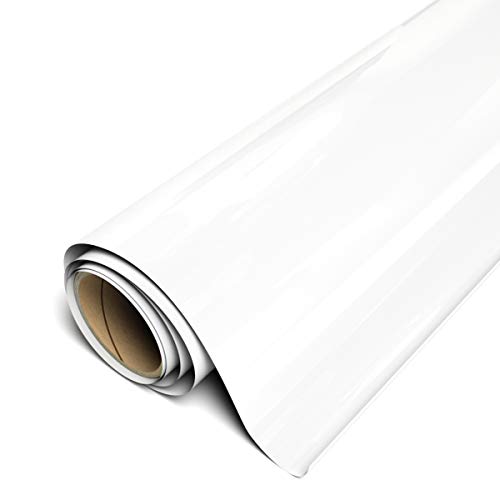
1. Siser EasyWeed Heat Transfer Vinyl — Best Overall
Siser EasyWeed has been the industry benchmark for years, and it still holds that spot in 2026. The sticky carrier backing is what separates it from cheaper alternatives — every tiny letter, every tight corner, every intricate detail stays put during weeding instead of lifting off with the matrix. That carrier adhesion is the single biggest quality-of-life difference you'll feel switching from a budget roll to EasyWeed. You peel the excess away cleanly, the design sits exactly where you cut it, and you move straight to pressing.
Press settings are forgiving and fast. A household iron works, but a heat press gives you the best results at around 305°F for 10–15 seconds with medium pressure. One of EasyWeed's standout features is the hot-peel option — you don't have to wait for the vinyl to cool before pulling the carrier sheet. That speeds up production runs considerably. It also applies with a one-second tack when layering, so you can stack multiple colors without pre-pressing everything flat first. The 11.8" × 15-foot roll fits virtually every home cutter on the market, including the Cricut Maker, Silhouette Cameo, and Siser's own Romeo and Juliet cutters.
Durability is excellent across cotton, polyester, blends, leather, and nylon. In real-world use you can expect 50+ wash cycles without cracking or peeling, provided you wash inside out on a gentle cycle. The matte finish is clean and professional-looking — not glossy or plasticky — which makes it the right choice for custom tees, hoodies, bags, and hats. CPSIA certification means it's safe for children's clothing too, which matters if you're making personalized kids' apparel.
Pros:
- Sticky carrier backing makes weeding intricate designs effortless
- Hot-peel capability speeds up production — no waiting for cool-down
- Bonds to an enormous range of fabrics including leather and nylon
- CPSIA certified and safe for children's garments
- Compatible with virtually every craft and professional cutter
Cons:
- Costs more per foot than budget brands
- White roll specifically may require two layers on very dark fabrics for full opacity
2. Cricut Everyday Iron-On White — Best for Cricut Users
If you own a Cricut Maker or Cricut Explore machine, this is the HTV that integrates most seamlessly with your existing workflow. Cricut's Design Space software already has the cut settings dialed in for Everyday Iron-On, so you don't spend time experimenting with blade depth or speed — you load the material, select the preset, and cut. That zero-configuration setup is a genuine advantage for beginners who haven't yet built a mental library of cutter settings.
The three-pack bundles three 12" × 2-foot rolls for a total of 6 feet of material, which is practical for smaller projects and lets you test how the vinyl behaves on different fabrics before committing to a larger roll. Each sheet measures 12 inches wide, which fits naturally on Cricut mats. You can apply it with the Cricut EasyPress, a standard heat press, or even a household iron — the vinyl is flexible about heat sources. According to Cricut, it's rated for 50+ wash cycles when you wash inside out and tumble dry low, which is solid for a brand-name HTV at this price point.
Layering is straightforward. You can stack up to three layers of Everyday Iron-On to build multicolor designs without the layers peeling apart in the wash. The adhesion on fabric is strong, and it handles both smooth cotton and lightweight polyester blends well. Where it falls slightly short compared to Siser EasyWeed is weeding performance on very fine details — the carrier isn't quite as sticky, so tiny lettering can occasionally lift. For typical designs with normal-sized text and shapes, that's rarely an issue. This is an excellent pick if you're already in the Cricut ecosystem and want a reliable, proven material.
Pros:
- Native Cricut Design Space cut presets eliminate guesswork
- Works with EasyPress, household iron, or any heat press
- Layers up to three sheets for multicolor designs
- Rated for 50+ washes — durable for everyday wear
Cons:
- Only 6 feet total per pack — more expensive per foot for larger projects
- Weeding very fine details is slightly trickier than with Siser EasyWeed
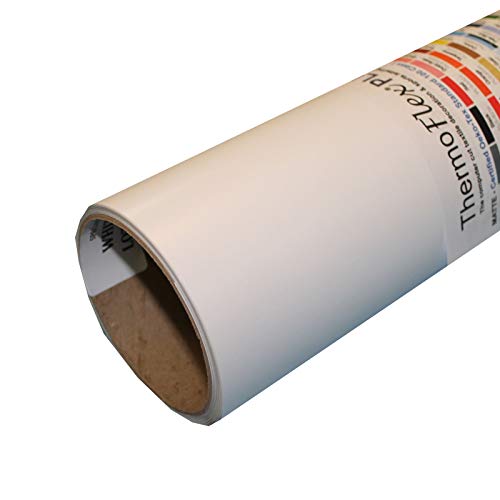
3. ThermoFlex Plus 15" Roll — Best for Bulk Projects
ThermoFlex Plus is the roll you reach for when you have a lot of shirts to press and cost-per-foot matters. At 15 inches wide and 30 feet long, this is a genuinely large roll — wide enough to cut full-front chest graphics without piecing together strips, and long enough to run a meaningful production batch before you need to reorder. The 15" width also opens up design possibilities that a standard 11.8" roll closes off, particularly for oversized graphics and youth-to-adult size scaling.
The material itself cuts cleanly on most vinyl cutters, though you'll need to adjust your cut settings manually since ThermoFlex Plus doesn't have automatic presets in Cricut or Silhouette software the way brand-specific materials do. Weeding is smooth, and the carrier sheet holds detail work reasonably well. Press temperature is typically around 320°F for 10–15 seconds with firm pressure, and the vinyl adheres strongly to cotton and poly-cotton blends. The result has a slightly softer hand (how the finished transfer feels against skin) than some premium brands, which many wearers actually prefer on everyday tees.
For small business owners running custom shirt orders or anyone who decorates apparel regularly, ThermoFlex Plus delivers professional results at a bulk price that makes your margins work. It's not the most beginner-friendly material — you need to dial in your settings — but once you do, it's a reliable workhorse. If you're building out a full apparel decoration setup, pair this with a quality heat press; our guide to types of heat press machines will help you choose the right press for your volume.
Pros:
- 15" width enables full-front and oversized graphic designs
- 30-foot roll length is excellent value for batch production
- Smooth weeding performance and strong fabric adhesion
- Soft hand feel — comfortable for everyday wear
Cons:
- No automatic cut presets in major cutter software — manual setup required
- Larger minimum commitment than smaller rolls
4. Siser Glitter HTV 11.8" x 5ft Roll — Best Glitter Finish
Siser Glitter HTV gives you the sparkle finish that standard matte or smooth vinyl simply can't replicate. This is the material for dance team uniforms, cheer apparel, custom party shirts, holiday designs, and anywhere you want your graphic to catch the light. Siser's glitter formula is thicker than their standard EasyWeed — it has to be, to encapsulate the glitter particles — but it still cuts and weeds with the reliability you expect from the Siser brand.
The key thing to understand about glitter HTV is that you cut it from the back (glitter side down on the mat) and you don't mirror your design the way you do with standard HTV. That's a common mistake that leads to wasted material, so double-check your cutter software settings before you start. Once you get the workflow right, Siser Glitter bonds exceptionally well to cotton and cotton-poly blends, and the glitter doesn't shed or flake in the wash the way craft-store glitter iron-on sometimes does. Press at around 320°F for 10–15 seconds and cold peel for best results.
The 5-foot roll length is shorter than Siser's standard EasyWeed, reflecting the higher cost of the material. For most glitter accent projects — names on jerseys, holiday shirt embellishments, small logo elements — 5 feet is plenty. You wouldn't typically use glitter HTV for a full chest graphic anyway, since the raised texture gets heavy quickly. Think of it as an accent material: pair it with a flat EasyWeed color layer underneath for depth, or use it as the sole material on bold single-color designs where you want maximum sparkle impact.
Pros:
- Striking glitter finish that holds up through washing without shedding
- Siser quality construction — reliable cutting and weeding
- Excellent for accent layers over standard HTV colors
- Strong adhesion on cotton and cotton-poly blends
Cons:
- Requires cold peel and different cutting orientation than standard HTV
- Only 5 feet per roll — higher cost per foot than smooth HTV
- Thicker material can feel stiff on very lightweight shirts
5. Stahls' CAD-Cut T-Shirt Pro HTV — Best Budget Pick
Stahls' is one of the most respected names in the professional apparel decoration industry, and the CAD-Cut T-Shirt Pro brings that pedigree to a budget-accessible price point. This is a lightweight, thin HTV — noticeably lighter than EasyWeed — which translates to a soft, barely-there feel on the finished shirt. If you've ever worn a shirt with a thick, plasticky graphic that crinkles after a few washes, you'll immediately appreciate how different T-Shirt Pro feels against your skin.
The warm-peel feature is a practical time-saver. Unlike cold-peel materials that require you to wait 30–60 seconds after pressing, warm peel means you pull the carrier sheet within a few seconds of lifting your press — not quite as fast as hot-peel EasyWeed, but significantly faster than cold-peel alternatives. For anyone doing small production runs, that time savings adds up quickly across a dozen shirts. The material is also lab-tested for 50+ washes, so durability is confirmed rather than just claimed.
Weeding is easy thanks to the thin construction — the excess matrix lifts cleanly even on moderately detailed designs. Where T-Shirt Pro makes its tradeoffs is on very intricate work: ultra-fine text below about 1/4 inch or extremely delicate swirls can be trickier to weed cleanly compared to EasyWeed's stickier carrier. For bold text, logos, simple shapes, and standard graphic tees, it performs excellently and represents outstanding value per foot. If you're just getting started with HTV and want to practice your workflow without burning through expensive material, this is a smart first roll.
Pros:
- Thin and lightweight — exceptional soft hand feel on finished shirts
- Easy to weed for standard designs — great for all skill levels
- Warm peel speeds up production workflow
- Lab-tested at 50+ washes — genuine durability backing
- Budget-friendly price per foot from a professional brand
Cons:
- Very fine detail work is harder to weed than with EasyWeed's stickier carrier
- Thinner material requires slightly more careful press pressure calibration
6. Siser EasyWeed Stretch Matte HTV — Best for Athletic Wear
Standard HTV on a spandex shirt is a recipe for cracking — the fabric stretches but the vinyl doesn't, and within a few wears the graphic starts to split at the edges. Siser EasyWeed Stretch solves that problem directly. This is specifically engineered for stretchy fabrics: spandex, lycra, compression wear, athletic mesh, yoga pants, leggings, and anything with four-way stretch. It flexes with the garment instead of fighting it, which means your design stays intact through workouts and washes.
The formula is thinner and lighter than standard EasyWeed — at 85 microns, it's noticeably more supple in your hands. That thinness is the mechanical reason it stretches rather than cracks: less material mass means less resistance when the fabric pulls in any direction. It applies at a lower temperature than standard EasyWeed (320°F for 20 seconds with firm pressure), which also makes it safer for heat-sensitive performance fabrics that can scorch or melt at higher temperatures.
Beyond athletic wear, EasyWeed Stretch is also a great choice for baby onesies, fitted caps, and any garment where the fabric moves substantially during wear. It adheres to 100% cotton, 100% polyester, cotton-poly blends, spandex, and leather. The carrier backing retains EasyWeed's famous sticky properties, so weeding intricate designs is just as clean as with the standard version. If you're decorating athletic uniforms, yoga apparel, or any stretch fabric — this is the only HTV you should be using. For a broader look at what materials work best on different shirt types, our T-shirt printing materials checklist covers the full picture.
Pros:
- Designed for spandex and stretch fabrics — flexes without cracking
- Thinner than standard EasyWeed — barely noticeable on lightweight garments
- Lower application temperature protects heat-sensitive performance fabrics
- Same excellent weeding experience as standard EasyWeed
- CPSIA certified and PU composition — safe for children's clothing
Cons:
- Unnecessary for non-stretch fabrics — standard EasyWeed is a better choice on cotton
- Slightly higher price than standard EasyWeed per foot
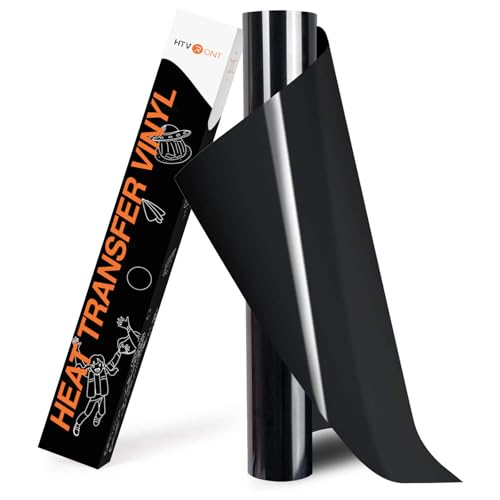
7. HTVRONT HTV Vinyl Roll 12" x 8ft — Best Value Black Roll
HTVRONT has built a strong reputation in the budget HTV space by delivering consistent quality at prices that undercut the name brands significantly. This 12" × 8-foot roll of black HTV is one of their most popular SKUs, and for good reason: it cuts cleanly, weeds without drama, and sticks to fabric with enough grip to survive normal washing. For anyone who goes through a lot of black or dark-colored vinyl — think custom tees, tote bags, hat logos — this delivers serious value per foot.
The material is SGS certified (a third-party safety and quality certification), which matters if you're making items that contact skin directly, especially for kids or athletic wear. Press parameters are standard: 300–320°F, medium pressure of 5–8 kg, 10–15 seconds, then cool for 1–2 minutes before cold peeling. The cold-peel requirement is worth noting — you need that cooling time or the adhesion won't be fully set when you pull the carrier. Rushing the peel is the most common reason budget HTV lifts at the edges, so build that minute-long pause into your workflow from the start.
In terms of weeding, HTVRONT performs well on designs with moderate detail. It's not quite at Siser EasyWeed level on ultra-fine intricate work, but for bold text, simple logos, and standard graphic shapes it weeds reliably. The vinyl is described as "pretty sticky" by the brand, and real-world results back that up — it holds firm through repeated wash cycles without fading, peeling, or cracking. The 12" width works on all standard home cutting machines. If your budget is limited and you primarily work with dark colors on everyday cotton shirts, HTVRONT gives you professional-looking results without the premium brand price tag. For context on how HTV compares to other shirt-decorating techniques, the sublimation vs heat transfer comparison is worth reading before you commit to a workflow.
Pros:
- Excellent price per foot — strong value for bulk users
- SGS certified — verified safe for skin contact
- Good adhesion and wash durability on cotton and poly blends
- Works on a wide range of fabrics including spandex and athletic mesh
Cons:
- Requires cold peel with mandatory cooling time — can't rush the process
- Weeding very fine details requires more care than premium brands
- Less color variety available compared to major brands
Key Features to Consider When Choosing Heat Transfer Vinyl for Shirts
Fabric Compatibility and Stretch
The single most important matching decision you'll make is pairing your HTV to your fabric. Standard matte HTV like Siser EasyWeed or HTVRONT works perfectly on cotton, polyester, and cotton-poly blends — the fabrics you're using for the vast majority of t-shirts. If your project involves spandex, lycra, compression wear, or any four-way stretch fabric, you need a stretch-specific HTV. Using standard HTV on stretch fabric results in cracking within a few wears, no matter how well you press it. The vinyl simply can't flex with the fibers. Match your HTV type to your fabric type first, then choose your brand and finish. According to Wikipedia's overview of iron-on transfers, the adhesive chemistry in heat transfer materials is specifically formulated around the substrate it's designed for — which is exactly why stretch formulas are chemically different from standard ones.
Weeding Difficulty and Carrier Sheet Quality
Weeding is the process of removing the vinyl you don't want — the negative space around your design — using a weeding hook or pin tool. The quality of the carrier sheet (the clear plastic backing that holds your cut design) determines how easy or frustrating this step is. A sticky carrier holds every tiny piece of vinyl in place while you pull away the excess. A weak carrier lets small letters or fine details lift up with the matrix, ruining your design. If you're working with intricate custom lettering, small logos, or any design with fine internal cuts, invest in a premium brand like Siser EasyWeed that's specifically engineered for weeding ease. For bold, simple designs, budget brands like HTVRONT perform well enough that the price difference isn't justified.
Peel Type: Hot, Warm, or Cold
After pressing, you remove the carrier sheet — but when you do that matters. Hot-peel materials like Siser EasyWeed let you pull the carrier immediately after pressing, right off the heat. Warm-peel materials like Stahls' T-Shirt Pro require a brief pause of a few seconds. Cold-peel materials like HTVRONT require you to wait 1–2 minutes until the vinyl is fully cooled before pulling. Hot and warm peel are faster for production, which matters if you're pressing multiple shirts in a session. Cold-peel materials can deliver excellent results, but rushing the peel before the adhesive sets is the most common cause of lifting edges and adhesion failures — so build that wait time into your process and don't skip it.
Width, Roll Length, and Cost Per Foot
Standard home-cutter HTV rolls come in 11.8" or 12" widths, which fits on standard cutting mats. Professional rolls go up to 15" or wider, enabling full-front chest graphics and adult 2XL+ shirt sizing without piecing designs together. For small personal projects, a 5- or 6-foot roll is plenty. For a small custom apparel business, bulk 20- or 30-foot rolls bring your cost per foot down significantly and reduce reorder frequency. Calculate what you actually need before buying — a 30-foot roll of ThermoFlex Plus is far more economical for batch production than buying ten individual 3-foot rolls of Cricut brand. Also factor in specialty finishes: glitter HTV costs more per foot than matte, and the tradeoff is the visual effect it adds, not greater durability.
What People Ask
What is the easiest heat transfer vinyl for beginners?
Siser EasyWeed is the top recommendation for beginners in 2026. Its sticky carrier backing makes weeding almost foolproof, the press settings are forgiving, and the hot-peel feature removes one step from the process. If you own a Cricut machine specifically, Cricut Everyday Iron-On is a close second because the cut settings are pre-programmed in Design Space — you don't need to figure out blade depth or speed manually.
What temperature do you press heat transfer vinyl?
Most standard HTV presses at 305–320°F (152–160°C) for 10–15 seconds with medium-to-firm pressure. Siser EasyWeed is 305°F for 10–15 seconds. Siser EasyWeed Stretch applies at a lower 320°F for 20 seconds. Always check the manufacturer's recommended settings for your specific material — pressing too hot for too long can scorch the vinyl or the fabric, while pressing too cool or too briefly results in adhesion failure.
How long does heat transfer vinyl last on shirts?
Quality HTV from brands like Siser, Stahls', and Cricut is rated for 50+ wash cycles when you follow care instructions: wash inside out, use cold or warm water on a gentle cycle, and tumble dry low or air dry. In practice, well-pressed HTV on a quality shirt can last the life of the garment — several years of regular washing — without cracking, peeling, or fading. Budget brands with proper pressing can also achieve solid durability, though they may show wear sooner on stretch fabrics.
Can you layer heat transfer vinyl?
Yes, most HTV is designed to be layered for multicolor designs. Siser EasyWeed applies with a one-second tack specifically for layering convenience. The general rule is to press your base layer first, then add subsequent layers on top. Keep total layers to two or three maximum — too many layers create a stiff, thick graphic that can peel at the edges over time. Use a thin, flexible HTV like Stahls' T-Shirt Pro when you need multiple layers to keep the overall hand feel manageable.
What is the difference between HTV and regular vinyl?
HTV (heat transfer vinyl) has a heat-activated adhesive backing that bonds to fabric fibers when pressed with heat and pressure. Regular craft vinyl (also called adhesive vinyl or pressure-sensitive vinyl) uses a peel-and-stick adhesive designed for hard surfaces like mugs, windows, and walls — it will not bond permanently to fabric. Using regular craft vinyl on shirts will result in the design peeling off after the first wash. Always use HTV specifically when decorating apparel.
Do you need a heat press or can you use a household iron?
A household iron works for small personal projects, but a heat press is significantly better for consistent results. An iron applies uneven pressure and doesn't maintain a stable temperature across its surface, which can lead to partial adhesion and premature lifting. A heat press delivers uniform, calibrated heat and consistent pressure across the entire design in a single press — which is why professionally decorated shirts last longer and look cleaner. If you're doing more than a few shirts a month, the investment in a heat press pays for itself quickly in material waste savings alone.
Buy on Walmart
- Siser EasyWeed Heat Transfer Vinyl 11.8" x 15ft Roll (White) — Walmart Link
- Cricut Everyday Iron-On, White - 6ft (3-Pack of 2ft Rolls) - — Walmart Link
- ThermoFlex Plus 15" Roll, Iron on Heat Transfer Vinyl, HTV ( — Walmart Link
- Siser Glitter HTV 11.8" x5ft Roll - Iron on Heat Transfer Vi — Walmart Link
- Stahls’ HTV Heat Transfer Vinyl CAD-Cut T-Shirt Pro Lab-Test — Walmart Link
- Siser EasyWeed Stretch Matte HTV 11.8" x 15FT Roll - (White — Walmart Link
- HTVRONT HTV Heat Transfer Vinyl Roll- 12" x 8ft Black HTV Vi — Walmart Link
Buy on eBay
- Siser EasyWeed Heat Transfer Vinyl 11.8" x 15ft Roll (White) — eBay Link
- Cricut Everyday Iron-On, White - 6ft (3-Pack of 2ft Rolls) - — eBay Link
- ThermoFlex Plus 15" Roll, Iron on Heat Transfer Vinyl, HTV ( — eBay Link
- Siser Glitter HTV 11.8" x5ft Roll - Iron on Heat Transfer Vi — eBay Link
- Stahls’ HTV Heat Transfer Vinyl CAD-Cut T-Shirt Pro Lab-Test — eBay Link
- Siser EasyWeed Stretch Matte HTV 11.8" x 15FT Roll - (White — eBay Link
- HTVRONT HTV Heat Transfer Vinyl Roll- 12" x 8ft Black HTV Vi — eBay Link
Next Steps
- Pick your material match first: If your project involves spandex or athletic wear, go directly to Siser EasyWeed Stretch. For standard cotton tees, Siser EasyWeed or Stahls' T-Shirt Pro are your best starting points.
- Check current prices on Amazon: HTV pricing shifts frequently — click through to any of the product links above to see today's price and check for bundle deals or color variety packs before you buy a single roll.
- Test your cut settings on a scrap piece: Before cutting your main design, run a test cut on a small strip of your chosen HTV at your cutter's recommended settings. It takes 30 seconds and saves you from wasting material on a full sheet.
- Review the comparison table above side by side against your specific needs — width, roll length, peel type, and fabric compatibility — to confirm which pick fits your project before buying.
- Read our related guides if you're still building out your setup: types of heat press machines to find the right press, and T-shirt printing materials checklist to make sure you have everything you need before your first session.
 |  |  |  |
About Rachel Kim
Rachel Kim spent five years as a merchandise buyer for a national office supply retail chain, evaluating printers, scanners, and printing accessories from Canon, Epson, HP, Brother, Dymo, and Zebra before approving them for store inventory. Her buying process involved hands-on testing against competing models, reviewing long-term reliability data from vendor reports, and vetting price-to-performance claims that manufacturers routinely overstated. That structured evaluation experience translates directly into the kind of buying guidance that cuts through marketing language and focuses on what actually matters for a specific use case. At PrintablePress, she covers printer and printing equipment reviews, buying guides, and head-to-head product comparisons.


Get some FREE Gifts. Or latest free printing books here.
Disable Ad block to reveal all the secret. Once done, hit a button below
| | | |